

What if practicing speech sounds felt more like playtime than another round of drills? The best articulation games for kids invite children to talk, laugh, and try sounds without making every turn feel like a test. If repeated practice is starting to feel dull or pressured, a playful change of pace can make it easier to join in.
The key is finding activities that fit the child, rather than forcing a child to fit the game. You can bring target sounds into familiar play, follow a child’s interests, and keep encouragement positive. The ideas below can help you choose an activity, while an SLP’s recommendations can guide practice for a specific speech goal.
From silly sound challenges to tongue twisters, these ideas can work at home, in a classroom, or during a session with an SLP. Really Fun Games’ Triple Tongue Twisters, designed for ages 8 and up, is one playful option for shared vocal fun. It is a game, not a replacement for individualized therapy. Let’s make practice feel lighter, livelier, and more connected.
Key Takeaways
- Use familiar play, pictures, toys, movement, or conversation to make speech-sound practice feel more inviting.
- Choose articulation games for kids based on the child’s interests and the speech goal, rather than assuming one format works for everyone.
- Compare screen-free, digital, and card-based activities by how much setup, flexibility, and adult guidance they need.
- Keep family play casual, and use an SLP-selected target when an activity is intended to support a specific speech goal.
- Bring vocal play into shared game time with activities suited to the players, including options designed for older children.
What Are Articulation Games for Kids, and What Can Play Add?
Articulation games for kids are playful activities that invite children to say particular speech sounds, words, or phrases during an enjoyable shared activity. A game might prompt a child to name a toy, choose between two silly options, or try a playful phrase. The activity creates opportunities to speak, but it does not diagnose or treat a speech difficulty or guarantee that a child’s speech will change.
Articulation focuses on how speech sounds are produced. It’s related to, but different from, broader language activities that build vocabulary or sentence skills, conversation games that encourage back-and-forth sharing, and social-skills games that practice interaction. One activity can touch on more than one area, but its purpose depends on what players are doing. For background on how articulation fits within speech sound disorders, see Speech Sound Disorder.
How do articulation games invite children to practise sounds?
Play gives children a reason to speak: taking a turn, answering a silly prompt, or choosing what happens next. For instance, a toy animal might “ask” for a name, or a player might pick which pretend snack to serve. These moments can make sound practice feel like part of the activity instead of a string of repeated drills.
If a child already has speech goals, keep the target and practice approach aligned with guidance from their speech-language pathologist (SLP). Adults can model a word, offer a choice, or celebrate participation without insisting on perfect speech. If a child seems frustrated, let them pass, change the activity, or simply enjoy the game together.
Who can enjoy speech-sound games?
Families can weave playful speaking into everyday time together, while educators and homeschoolers can use a light activity as part of group learning. SLPs may select or adapt games to suit an individual child’s goals. The purpose can vary by setting: a family might be connecting through laughter, while a therapist is following a specific plan.
Keep the activity suited to the child. Younger children might enjoy naming familiar toys or making a sound choice during pretend play; older children may prefer word challenges or tongue twisters. Really Fun Games’ products are designed for ages 8 and up, and Triple Tongue Twisters offers a playful way to enjoy vocal wordplay together. You can explore games for shared play as one option for bringing lively language into game time.
Playful speech-sound practice can invite children to join in, while individualized articulation therapy follows a child’s specific needs and goals. Keeping that distinction clear helps adults make room for fun without treating every game turn as a test.
How to Make Articulation Practice Feel Like Play
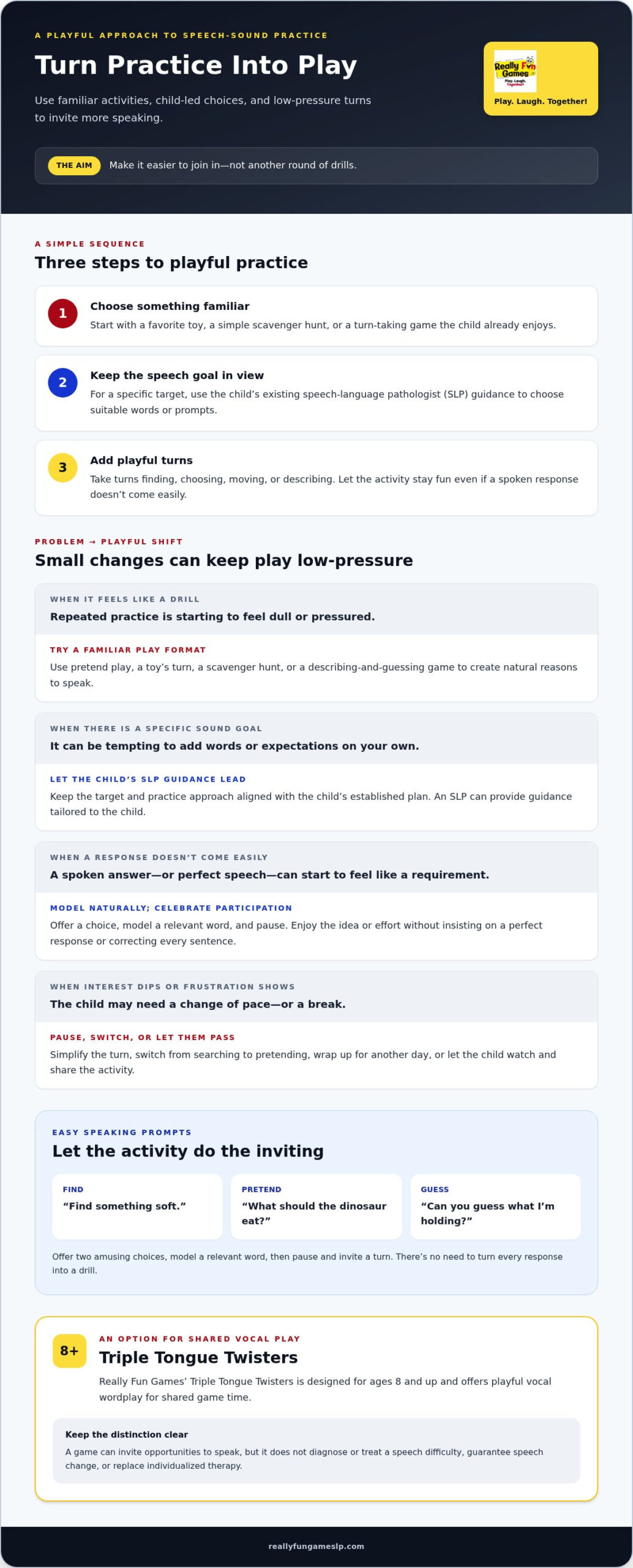
Keep the setup simple and let the child’s curiosity lead. A familiar activity gives them something enjoyable to do, while a small adjustment can create natural chances to speak. Try this sequence:
- Choose something familiar. Pick a favorite toy, a simple scavenger hunt, or a turn-taking game the child already enjoys.
- Keep the speech goal in view. If you’re practicing a specific sound, use the child’s existing SLP guidance to choose suitable words or prompts.
- Add playful turns. Take turns finding, choosing, moving, or describing something. Let the activity stay fun even if a spoken response doesn’t come easily.
Pictures can inspire a quick naming game; toys can act out a pretend scene; movement can turn a hunt into an adventure. Conversation works, too: offer two amusing choices and let the child pick one. These flexible articulation games for kids can fit into ordinary play without requiring a stack of worksheets or a screen.
Which simple game formats can invite more speaking?
Try turn-taking with a favorite toy, a scavenger hunt for familiar objects, pretend play with characters, or a describing-and-guessing game. Keep prompts brief and easy to change: “Find something soft,” “What should the dinosaur eat?” or “Can you guess what I’m holding?” Model a relevant word naturally, then pause and invite the child to take a turn. There’s no need to turn every response into a drill.
For a specific speech target, let the child’s established plan guide which words or sounds you bring into the activity. The Children’s Hospital of Philadelphia offers helpful background on Understanding Speech Sound Disorders; an SLP can provide guidance tailored to an individual child.
How can adults keep practice positive?
Offer choices, notice effort, and enjoy the moment together. “Would you rather hide the toy or give it a name?” gives the child a say, while “That was a fun idea!” celebrates participation without judging how a sound came out. Avoid interrupting each sentence to correct speech. If a child is practicing a target, follow their SLP’s recommendations rather than adding new corrections or expectations.
Interest can dip, and that’s useful information. Pause for a snack, simplify the turn, switch from searching to pretending, or wrap up and play another day. A child who wants to watch instead of answer can still share the activity. Keep it light, and let connection matter more than completing a set number of turns.
Keep speech practice playful and low-pressure by following the child’s interests, offering easy chances to speak, and being ready to pause or switch activities. For a ready-made option that brings vocal wordplay into shared game time, explore tongue twister games, or discover more ways to play at Really Fun Games.
Choosing Articulation Games: Screen-Free, Digital, or Card-Based?
The right format is the one that feels workable for the child and the moment. A lively card game may suit family play, while a digital activity or a simple household-object game may fit another setting. None is automatically best for speech practice. Consider how much setup it needs, whether it encourages interaction, how easily you can adapt it, and whether an adult can support the child’s existing goals.
Here’s a quick, non-clinical comparison:
- Screen-free play: Usually easy to adapt with toys, movement, pretend play, or familiar objects. An adult can adjust turns and prompts as the child’s interest changes.
- Digital activities: Offer another way to engage, including for a child who enjoys screens or prefers a solo activity. Adult support can help connect the chosen activity to the child’s interests and established speech goals.
- Card-based games: Provide a shared structure for taking turns and responding to prompts. Adults can often join in, model a response, and keep the activity conversational.
When might screen-free games suit the moment?
Screen-free play works well when you want face-to-face interaction or need to use what’s already at hand. Make a movement game out of walking to find an object, use a toy in pretend play, or describe a household item for someone else to guess. No special materials are needed. The adult can slow down, change a prompt, or let the child lead as play unfolds.
That flexibility is useful at home, in a classroom, or during a homeschool activity. A familiar object can inspire a quick word choice or a silly story, while shared play keeps the focus broader than simply producing a sound on demand. If the activity is meant to practice a particular speech target, keep the prompts consistent with the child’s existing SLP guidance.
When might digital or independent activities fit?
A digital game can be one option if it appeals to the child or fits the setting, but a screen isn’t required. Some activities are designed for solo play; others invite an adult or another child to join. An adult can help choose something that suits the child’s interests and, when relevant, aligns with their speech goals. Shared games naturally create opportunities for turn-taking and conversation, while solo play may offer a quieter, more independent experience.
Think about what you want from the moment. If connection and back-and-forth interaction matter, choose a format that gives players reasons to respond to one another. If the child needs a change of pace, a solo option may feel more inviting. Either way, articulation games for kids are a format for playful participation, not a guarantee of clinical progress. Let the child’s comfort, the setting, and any SLP recommendations guide your choice.
How to Adapt Articulation Games for Home, Class, or Therapy
The same game can feel completely different around a family table, in a classroom, or during an SLP session. Adapt it with three questions: Where are we playing? What is this child interested in? Is there an existing speech goal to follow? These quick checks help adults shape the activity without making every setting feel like a therapy session.
For casual family play, the goal may simply be sharing an enjoyable moment. If a child is practicing a particular sound as part of an established plan, use the SLP’s guidance to choose suitable prompts and responses. Keep those purposes distinct: relaxed conversation and game time don’t need to become target practice, while an activity intended to practice a specific sound should stay aligned with the child’s goals.
How can families make speech-sound play part of everyday life?
Build in short, optional turns during a shared game, then let conversation flow wherever it goes. Invite siblings, grandparents, or caregivers to take turns too, so one child isn’t the center of attention. If the child loses interest, move on without coaxing them to finish. The game is there to support a warm moment together, not to turn every exchange into practice.
Tongue twisters can add a burst of silly vocal play for families who enjoy trying playful phrases together. For more ideas about tongue twister games and family fun, explore How Tongue Twister Games Improve Speech, Confidence, and Family Fun. Keep the framing light: shared play can be enjoyable, but it doesn’t replace individualized speech guidance.
How can educators and SLPs adapt a game to a child’s goals?
In a classroom or homeschool group, offer brief turns as one option among several, rather than asking a child to perform in front of everyone. A student might choose to answer, point to a picture, or pass. SLPs can adjust prompts to the child’s established plan, while teachers can keep general game participation welcoming and avoid singling out a student for speech differences.
Adapt the format, too. A child may prefer a partner turn, a visual choice, or a quieter role before speaking aloud. An SLP can guide practice toward an individual target; a group activity can focus on taking turns and enjoying the game. These flexible articulation games for kids work best when participation fits the child, rather than expecting every player to respond in the same way.
For a shared activity that brings playful words into game time, explore tongue twister games. If you’re looking for broader ideas for speech-language professionals, Best Educational Games for Speech Therapists: 2026 Guide is another useful topic to explore. Discover games for your next shared play session at Really Fun Games.
Bring Articulation Play to Game Time with Really Fun Games
Not every game needs to be built around a speech goal. Sometimes the best fit is simply an enjoyable shared activity that gets everyone talking, laughing, and taking turns. Really Fun Games creates award-winning communication and educational games designed for ages 8 and up, with options that families, educators, and SLPs can enjoy together in different ways.
For children who meet the age range, a tongue twister game can bring playful sound patterns into game time. It’s a chance to try a lively phrase, listen to how it sounds, and share the moment with others. Keep the purpose clear: this kind of game can be fun vocal play, but it isn’t a substitute for an SLP’s individualized therapy or a promise of speech progress.
How can tongue twister games add a playful challenge?
Tongue twisters invite players to enjoy the rhythm and patterns of spoken words. A tricky phrase can prompt a do-over, a laugh, or a friendly challenge to the other players. Triple Tongue Twisters is one Really Fun Games option for shared vocal play. Players can enjoy the challenge together without treating each attempt as a test or a measure of a child’s articulation.
That distinction can make the activity more comfortable for everyone. Families might enjoy it as part of game night, while educators or SLPs may choose to use tongue twisters as a light shared activity in a group. If a child is working on a particular speech target, follow their SLP’s guidance rather than assuming the game’s phrases match that goal. Keep the laughter and connection at the center.
Where can readers find games for shared play?
Choose a game based on who’ll be playing and what kind of moment you want to create. A playful word challenge can suit a group that enjoys speaking aloud; another communication game may be a better fit when the aim is conversation or getting to know one another. Invite children to join in at their comfort level, and let adults participate too. Shared play should feel welcoming, not like a performance.
Really Fun Games offers options for families, educators, and SLPs looking for enjoyable ways to bring people together. Explore games for shared play and choose a game that fits your group, whether you’re adding a lively challenge to family game night or looking for a playful activity for older children. Keep individualized speech goals guided by the child’s SLP, then make room for the simple pleasure of playing together.
Make Your Next Game Night a Little More Playful
Choose one small change for your next shared activity: let a child pick the game, invent a silly prompt, or invite everyone to take a turn. A relaxed start can make it easier to discover what feels enjoyable, without turning ordinary conversation into a lesson. Let the game be a game, and let the laughter count as part of the fun.
As you explore articulation games for kids, keep the child’s comfort and interests at the center. There’s no need to make every round about speech sounds. A playful word challenge can simply be a bright spot in family time, a classroom break, or a session shaped around an SLP’s plan.
Ready to bring more conversation and vocal play to your group? Explore the Really Fun Games collection and find a game that suits your next get-together. Here’s to joyful turns, shared laughs, and play that feels good for everyone.
Frequently Asked Questions
What are articulation games for kids?
Articulation games for kids are activities that make speaking sounds, words, or phrases part of a playful task. For example, a child might say the name of a picture to move a game piece or choose a word to add to a silly story. The game creates a reason to speak; its format alone doesn’t tell you which sounds a child should practice or whether a particular activity suits their needs.
Can games help children practise articulation?
Games can give children an enjoyable context to try speech sounds, especially when prompts are chosen to fit an existing goal. For example, an adult might use picture cards during a matching game, with a child naming a picture when they feel ready. Keep the activity focused on taking part, not achieving a perfect turn. If a child has an SLP, follow their recommendations for target words and practice.
How do you make articulation practice fun at home?
Build a playful moment around something your child already likes, such as drawing, building, or choosing a family game. You might invite them to pick a character’s name or describe a creation, then respond to what they say instead of stopping the activity to correct each sound. Let them choose whether to join in. If the activity feels like work, drop the speech prompt and enjoy the play.
Are online articulation games effective for kids?
Online games can be engaging for some children, but a screen-based activity isn’t automatically more useful than face-to-face play. Consider whether the game gives the child a chance to practice the sound or words that match their current goal, and whether an adult can help guide it. A child may enjoy a solo digital activity, while another may prefer a game shared with a parent or classmate.
What is the difference between articulation games and speech therapy?
An articulation game is an activity; speech therapy is individualized support from a speech-language pathologist (SLP). An SLP can identify a child’s needs, select goals, and guide suitable practice. A family game may offer a relaxed chance to talk, but it doesn’t replace that professional guidance. If you’re unsure whether to correct or model a sound during play, use the approach the child’s SLP recommends.
Can tongue twisters help kids practise speech sounds?
Tongue twisters let children play with the sound and rhythm of words, making them a lively choice for shared speaking and laughter. They can be tricky to say, so keep the mood light and let a child listen, try a phrase, or pass. A tongue twister isn’t automatically suited to a child’s specific speech goal. For targeted practice, follow the child’s SLP guidance on which words or sounds to use.
What age can children play Really Fun Games?
Really Fun Games products are designed for ages 8 and up. When choosing a game for a younger child to join family play, consider whether the activity feels comfortable and enjoyable for them, and let them take part in a way that suits their age and interests. For children using a game alongside speech goals, an SLP can help determine whether the activity and prompts fit the child’s plan.