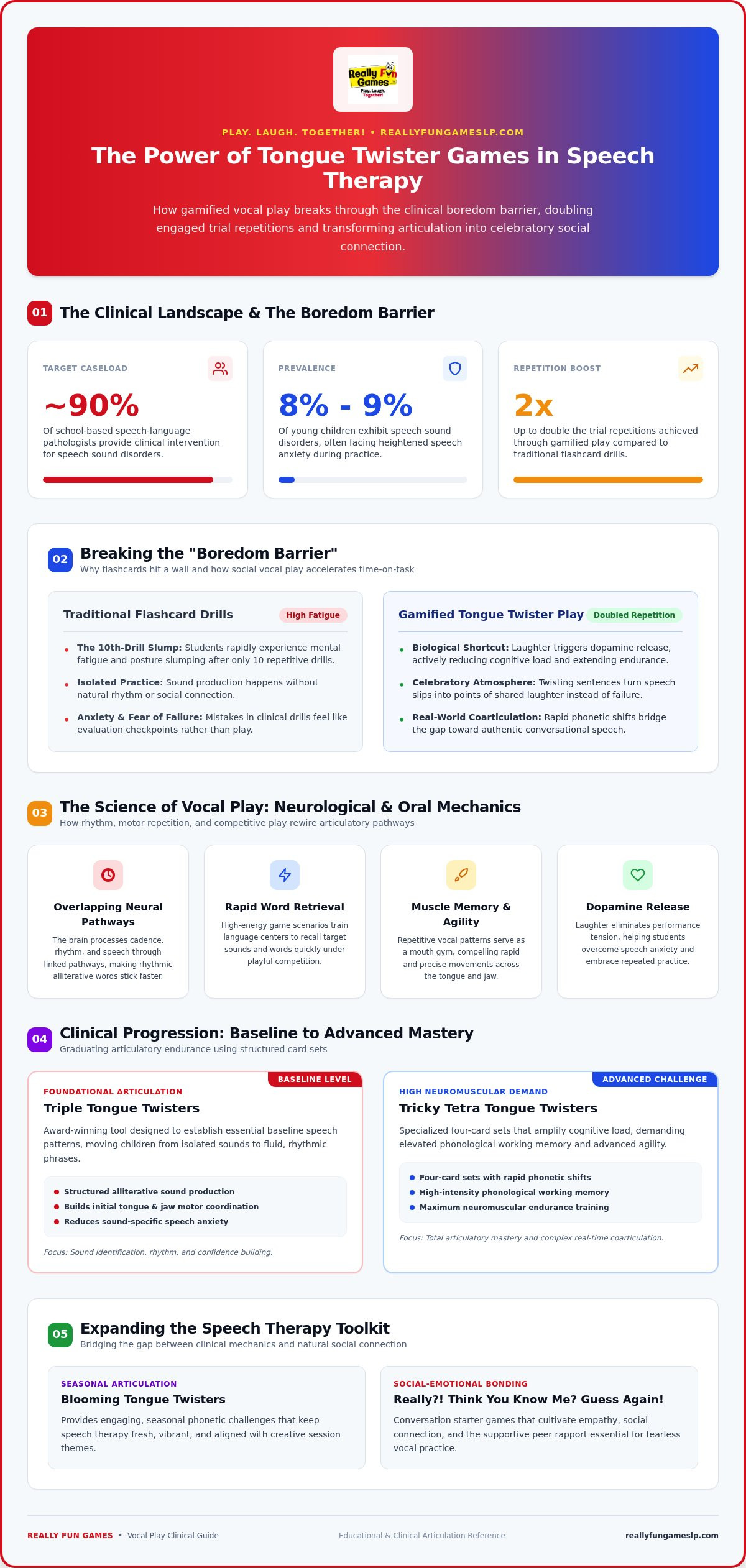
Nearly 90% of school-based speech-language pathologists provide clinical intervention for speech sound disorders, but the real challenge is often the “boredom barrier.” We’ve all seen it happen. A student starts to slump in their chair or lose focus after the tenth repetitive drill. It’s frustrating for you and discouraging for them. Integrating vibrant tongue twister games for speech therapy is the most effective way to flip the script and turn those quiet, repetitive moments into high-energy sessions filled with giggles and breakthroughs.
We know you want more than just progress; you want to see your students beam with confidence and clarity. This guide promises to show you how game-based play transforms therapy into a celebratory social experience. We’ll explore how our award-winning Triple Tongue Twisters and seasonal favorites like Blooming Tongue Twisters make articulation feel effortless. You’ll also see how conversation starters like Really?! Think You Know Me? Guess Again! build the social-emotional bonds that make every session a success. Let’s dive into the joyful world of vocal play and discover how to make speech therapy the highlight of every child’s day.
Key Takeaways
- Learn how vocal play reduces cognitive load and creates a celebratory atmosphere where children feel safe to practice and play.
- Discover how to integrate tongue twister games for speech therapy into your sessions to boost phonological awareness and tackle rapid phonetic shifts.
- Understand the clinical progression from Triple Tongue Twisters for beginners to Tricky Tetra Tongue Twisters for advanced articulatory agility.
- Gain five actionable strategies for using physical card games to bridge the gap between clinical drills and natural conversation.
- Explore why high-energy, physical games foster deeper human connection and social harmony compared to solo digital exercises.
Why Tongue Twister Games are a Powerhouse for Speech Therapy
Tongue twister games are a form of social, vocal play that specifically targets phonological awareness through high-energy interaction. Using tongue twister games for speech therapy turns what used to be a repetitive drill into a shared event. Unlike traditional tongue twisters which might be practiced in isolation, these activities prioritize connection. Tongue twister games are tools that combine alliteration with competitive social interaction. This specific blend of mechanics ensures that students aren’t just reciting words; they’re engaging with others in a way that makes every phonetic challenge feel like a win.
Laughter is a biological shortcut. When a student giggles at a “twisted” sentence, their brain releases dopamine. This effectively reduces the cognitive load of the therapy session. This “facilitated fun” allows children to engage in more repetitions without the mental fatigue that usually accompanies clinical drills. You can read more about how tongue twister games improve speech, confidence, and family fun to see this in action. Research shows that gamified mechanics can yield up to double the trial repetitions compared to traditional flashcard drills, significantly boosting engaged time-on-task.
The Articulation Advantage: Beyond Simple Drills
Repetitive vocal patterns are the gym for the mouth. Using tongue twister games for speech therapy helps students build essential muscle memory in the tongue and jaw by forcing rapid, precise movements. Alliteration plays a massive role here. It allows the speaker to identify and correct specific speech sounds in a structured yet playful way. We’ve seen students move from struggling with isolated sounds to mastering fluid, rhythmic speech patterns just by playing through a deck of Triple Tongue Twisters from Really Fun Games. These games bridge the gap between simple sound production and the complex coarticulation required for real-world conversation.
Building Confidence Through Celebratory Play
Speech anxiety can be a major roadblock for the 8% to 9% of young children who exhibit speech sound disorders. Games reframe the entire experience. When a mistake becomes a point of shared laughter rather than a failure, the pressure vanishes. This exuberant excitement of a game night environment accelerates learning because the child is no longer afraid to try. Social harmony is the secret ingredient. A child who feels connected to their therapist or family is far more willing to practice those difficult sounds. Really Fun Games focuses on this bond. Every session becomes an opportunity for connection, ensuring that the student feels supported, seen, and successful.
The Science of Vocal Play: How These Games Improve Pronunciation
Vocal play isn’t just a fun distraction; it’s a neurological powerhouse. Our brains process rhythm and speech through overlapping neural pathways, which is why adding a beat or a cadence to tongue twister games for speech therapy makes the words stick. By following ASHA clinical guidelines on speech sound disorders, we know that repetitive motor practice is the foundation of progress. Our games, including the award-winning Triple Tongue Twisters, challenge the brain to process rapid phonetic shifts in real time. This mental agility is what eventually turns a hesitant speaker into a confident communicator.
Phonological Awareness and Rapid Word Retrieval
Think of these games as a high-intensity workout for the brain’s language centers. In a typical therapy session, the speed of word retrieval is often a major hurdle for students. High-energy competitive play encourages students to find their words faster under the “pressure” of a fun game. While Triple Tongue Twisters are perfect for establishing a baseline, our Tricky Tetra Tongue Twisters provide the ultimate challenge for advanced students. These four-card sets increase the cognitive load significantly. They demand greater phonological working memory and neuromuscular endurance, pushing the student toward total mastery.
Muscle Memory and Oral-Motor Skills
Strength comes from purposeful repetition. We focus on the articulators, specifically the lips, tongue, and teeth, to ensure every sound is crisp and clear. Sensory-focused vocabulary helps students “feel” the vibration and placement of each phoneme, making the abstract concept of speech very physical and real. Laughter plays a surprising role here too. It naturally relaxes the vocal cords and improves resonance, which makes speech feel less like a chore. As a fun-loving facilitator, you can keep the energy high by modeling the joy of the game. When you lead with excitement, the student follows with renewed effort.
Social interaction is the catalyst for this entire transformation. When kids play together, they aren’t just practicing sounds; they’re building deep human connections. This social harmony reduces the anxiety often found in clinical settings. You can browse our full collection of games to find the perfect tool for your therapy goals. By shifting the focus from a medical task to a social triumph, we help students find their voice in the most joyful way possible.
Comparing Articulation Challenges: Triple vs. Tetra Twisters
Every student arrives at a different stage of their vocal journey, so having a versatile toolkit is essential for making progress. The Really Fun Games collection serves as a comprehensive system for speech-language pathologists (SLPs) to tailor their approach. By offering distinct levels of difficulty, these tongue twister games for speech therapy ensure that no child feels overwhelmed or under-challenged. It’s about finding that joyful “sweet spot” where play meets progress. This inclusive design allows you to support diverse skill levels within a single group, keeping everyone engaged and laughing together.
Triple Tongue Twisters: The Foundation of Articulation
For students just starting out, simplicity is the key to success. Triple Tongue Twisters focus on three-word alliterative bursts that target specific phonemes without taxing a child’s working memory. They’re ideal for younger kids, specifically ages 8 and up, who are learning to coordinate the complex movements of the lips and tongue. As highlighted in the NIDCD guide to speech production and milestones, mastering these motor patterns early is vital for clear communication. Triple Tongue Twisters are the perfect entry point for building vocal confidence. They allow for quick wins and immediate laughter, setting a positive tone for the entire therapy session while building the muscle memory needed for more complex tasks.
Tricky Tetra Tongue Twisters: The Ultimate Speech Challenge
Once a student has mastered the basics, it’s time to turn up the heat. Tricky Tetra Tongue Twisters add a fourth layer of phonetic complexity, pushing fluency and articulatory endurance to the limit. These cards are specifically designed to help students transition from isolated phrases into natural, conversational speech. They require a higher level of cognitive load and rapid motor planning, which is perfect for older students or those nearing graduation from therapy. In group therapy settings, these cards are transformative. They foster a sense of teamwork and collective vocal play as students cheer each other on through the most difficult “twists,” turning a challenging exercise into a celebratory social triumph.
Seasonal Variants: Keeping Therapy Fresh All Year
One of the biggest hurdles in long-term therapy is maintaining engagement over many months. We solve this by offering seasonal variants that keep the atmosphere festive and fresh. You can swap in Santa’s Tongue Twisters for December sessions or Trick-or-Treat Tongue Twisters to add some spooky fun to October. When spring arrives, Blooming Tongue Twisters refresh the clinic with vibrant, nature-themed challenges. This variety ensures that tongue twister games for speech therapy never feel like a chore. For more ideas on how to stock your therapy room with high-energy tools, check out our Best Educational Games for Speech Therapists: 2026 Guide.
5 Creative Ways SLPs Use Tongue Twister Games in Sessions
As a speech-language pathologist, your role is more than just correcting sounds; you’re a warm guide to connection. By using tongue twister games for speech therapy, you transform the clinical environment into a space of exuberant excitement. These games are designed to be easy to learn and highly replayable, ensuring that students stay engaged session after session. For clinics looking to maximize their impact across various diagnostic needs, the Really Fun Custom Games Bundle offers a versatile toolkit that adapts to every child’s unique journey.
The ‘Speed Round’ for Fluency Building
Set a timer for thirty seconds and let the fun begin. The “Speed Round” encourages rapid production, but as the facilitator, you’ll award points based on clarity rather than pure velocity. It’s a fantastic way to build fluency while maintaining a spirit of lightheartedness. If a student trips over a word, the group laughs together, keeping the atmosphere celebratory and optimistic. This approach helps students realize that mistakes are just part of the play, which significantly lowers their social anxiety during difficult phonetic shifts.
Group Challenges for Social Skills and Empathy
Social harmony is the secret to successful therapy. We love seeing SLPs pair our tongue twisters with Really?! Think You Know Me? Guess Again! to build deep rapport. Group sessions thrive when students practice active listening and patience during turn-taking. This combination fosters empathy and ensures that every child feels supported by their peers. By focusing on the shared experience of vocal play, you’re helping them build the confidence needed for natural, real-world conversations.
The ‘Articulation Relay’ for Active Learners
Some kids just need to move to stay focused. You can incorporate physical movement by placing cards across the room, creating a high-energy “Articulation Relay.” Students run to a card, recite the twister, and use our Extra Number Dials to track their successful repetitions in a way that feels like scoring a goal. It turns a standard drill into a celebratory sport. For more inspiration on how to use collaborative play to spark breakthroughs, check out these icebreaker games for groups.
Finally, don’t forget the power of peer-to-peer coaching and the home-to-clinic bridge. Encourage advanced students to act as “vocal coaches” for beginners, which builds leadership and reinforces their own skills. You can also send home seasonal decks like Santa’s Tongue Twisters to ensure that practice continues in a joyful way outside of the clinic. When therapy feels like a game, the progress never stops. Choose the perfect game for your clinic today and start building those meaningful bonds through play.
Choosing the Right Really Fun Games Collection for Your Therapy Goals
Physical cards offer a tactile spark that digital screens simply cannot replicate. While apps might provide convenience, they often miss the exuberant excitement and sensory feedback that drive real progress. Using tongue twister games for speech therapy in a physical format encourages eye contact, shared laughter, and genuine human connection. Really Fun Games acts as your expert guide in fun-loving facilitation. We prioritize the social harmony that makes learning feel like a celebration rather than a clinical task. You can explore our full selection of tools on our Our Games page to find the perfect fit for your specific needs.
For the Clinic: The Comprehensive SLP Toolkit
Professional settings require tools that are as durable as they are effective. The Really Fun Custom Games Bundle stands out as the best value for organizations and clinics looking to support a wide range of diagnostic categories. These cards are built to last; they are an ideal choice for traveling therapists who need portable materials that can survive a busy school week. Our award-winning collection has earned its reputation by focusing on the mechanics of play that actually work. When you bring these games into your clinic, you aren’t just providing an exercise. You’re facilitating a high-energy social event that students will look forward to every week.
For the Home: Bridging the Gap Between Sessions
Success in speech therapy often depends on what happens between your professional sessions. Parents frequently struggle to turn “homework” into a positive experience, but these games change that dynamic entirely. By practicing speech sounds at the dinner table, you can build meaningful bonds while your child focuses on winning the game. These are highly replayable activities that kids actually ask to play. It’s a joyful way to ensure consistent practice without the frustration of repetitive drills. You’ll find that the spirit of spontaneity and laughter naturally reduces speech anxiety, allowing your child to show off their progress in a low-pressure environment.
Whether you are a seasoned SLP or a dedicated parent, the goal is the same: confidence and clarity through connection. Our collection, including favorites like Triple Tongue Twisters and the seasonally themed Santa’s Tongue Twisters, provides the variety needed to keep engagement high all year long. Every game we create is a catalyst for joy. By focusing on the success and happiness of the players, we help transform the therapy journey into a series of celebrated milestones. Visit our Our Games page today to pick the deck that will spark the next breakthrough in your home or classroom.
Transform Every Session into a Celebration of Speech
Transforming speech therapy from a repetitive chore into a high-energy social event is the key to lasting progress. We’ve explored how vocal play reduces anxiety and how our tiered system of Triple and Tetra cards allows you to customize the challenge for every student. By integrating tongue twister games for speech therapy, you’re not just practicing sounds; you’re building the confidence and muscle memory needed for real-world communication.
Our award-winning game designs are trusted by SLPs and educators nationwide because they prioritize human connection over technical drills. Whether you’re working in a clinic or at the family dinner table, these games create a celebratory atmosphere where every “twisted” sentence is a win. With national shipping across the United States, getting these tools into your hands is easy and fast. We can’t wait to hear the laughter and see the breakthroughs in your next session.
Frequently Asked Questions
Are tongue twisters actually effective for speech therapy?
Yes, tongue twisters are highly effective tools for building articulation and phonological awareness. They act as a physical workout for the mouth, strengthening the coordination of the tongue, lips, and jaw. In pediatric oral health, specialized practices like Fun Valley Kids Dental Group similarly emphasize that proper dental and jaw development provides the physical foundation children need for sound production. Integrating tongue twister games for speech therapy helps students move from isolated sounds to fluid speech. Research indicates that gamified mechanics can yield up to double the repetitions of traditional drills. This makes every session more productive while keeping the energy high.
What age group is best for tongue twister card games?
Our collection is specifically designed for ages 8 to 120. While they’re perfect for elementary aged children, the high energy gameplay and clever alliteration ensure that teens and adults stay just as entertained. We focus on being deeply inclusive, so players of various skill levels can join in the fun together. Whether you are a grandparent playing with a grandchild or an SLP working with a middle schooler, these games foster a welcoming spirit.
Can tongue twister games help with stuttering or fluency issues?
Yes, these games are excellent for practicing pacing and phrasing. Therapists often use them to model voluntary stuttering or cancellations in a low pressure environment. By slowing down the rate of speech to master a tricky phrase, students learn to manage their fluency with more confidence. The celebratory atmosphere reduces the social anxiety often associated with stuttering. This makes it easier for kids to experiment with their speech patterns while feeling supported and encouraged.
How do I choose between Triple and Tricky Tetra Tongue Twisters?
You should choose based on the student’s current motor planning and working memory capacity. Triple Tongue Twisters use 3 card sets and are the ideal foundation for beginners or younger children. They provide a manageable threshold for sentence level articulation. Tricky Tetra Tongue Twisters use 4 card sets to introduce a higher cognitive load. These are perfect for advanced students who need to test their articulatory agility and neuromuscular endurance under more challenging, fast paced constraints.
Are these games suitable for a classroom setting as well as therapy?
Absolutely, our games are a favorite for teachers and homeschoolers alike. They work beautifully as icebreakers or team building activities that promote social harmony and active listening. In a classroom setting, the competitive gameplay keeps every student involved and excited. Beyond speech goals, they help with reading fluency and vocabulary development. It’s an easy way to inject some exuberant excitement into the school day while building essential communication skills and confidence through play.
Do I need special training to use these games with my child?
You don’t need any clinical background to enjoy these games with your child. Every deck is designed to be easy to learn and highly replayable for families. Your primary role is to be a fun loving facilitator who encourages laughter and spontaneity. The mechanics are simple enough that you can start playing within minutes of opening the box. This makes it easy to bridge the gap between professional therapy sessions and practice at the dinner table.
What makes Really Fun Games different from other educational cards?
Really Fun Games stands out because we prioritize human connection and social joy over technical specifications. Our award winning designs focus on the transformative power of simple social interactions. Unlike dry educational materials, these cards are vibrant and sensory focused. We create tools that act as a catalyst for harmony, ensuring that players focus more on the fun they’re having than the work they’re doing. It’s about bringing people together through laughter and meaningful communication.
How many players can participate in these speech therapy games?
Most of our tongue twister games for speech therapy are designed for 2 to 6 players. This range is perfect for small group therapy sessions, classroom stations, or family game nights. Having multiple players adds a social layer that encourages turn taking and sportsmanship. It also allows students to hear different models of speech production from their peers. The 20 to 40 minute playing time ensures you can complete a full game within a standard session.
