

What makes family game night fun isn’t necessarily finding the perfect game. It’s giving everyone a comfortable way to join in, whether that means sharing a surprising answer, teaming up, or laughing through a silly challenge. If you’re wondering how to make family game night fun, start with the people around the table, not a packed schedule.
Kids, teens, and adults may have different interests, energy levels, and ideas of fun. Complicated rules, high-stakes competition, or pressure to stay until the end can make a game feel like a chore. A relaxed invitation and a choice of ways to participate can help make the evening welcoming.
This guide offers practical ways to choose games for your group, keep rules and competition light, and give the evening an easy rhythm. From conversation card games to playful word challenges, the goal is to make room for laughter, connection, and an evening your family wants to repeat.
Key Takeaways
- Make invitations low-pressure so family members can join at their own pace and feel welcome from the start.
- Choose games based on the kind of fun your group enjoys, while keeping rules and turns comfortable for everyone.
- Use optional roles and small rule adjustments to include players with different preferences and confidence levels.
- Try a flexible welcome, quick-start activity, main game, and cheerful close to give the evening an easy rhythm.
- Make family game night fun with easy-to-learn, replayable games that spark conversation, playful challenges, and connection.
How to Make Family Game Night Fun Before the First Game Begins
Even when everyone wants more time together, they may not arrive at the table in the same mood. One person might be ready to start, while someone else is finishing a task, feeling tired, or unsure about joining in. A warm invitation makes room for those differences. Let family members know the evening is about enjoying each other’s company, not meeting a participation quota or playing perfectly.
A convenient time, a comfortable place to sit, and games within easy reach can do more for the atmosphere than a packed schedule. Keep the setup simple, so game night feels like an invitation rather than another family obligation.
Make the invitation easy to say yes to
Try a clear, friendly invitation: “We’re setting up a game after dinner if you’d like to join.” Mention that watching, dropping in later, or taking a break is fine. That freedom can help hesitant players feel included without putting them on the spot. Choose a time that fits your household’s usual rhythm instead of waiting for a perfect evening when everyone is equally energetic and available.
Set up a relaxed place to play
Make the playing area ready without making it feel formal. Clear enough space for the game, offer comfortable seating, and keep snacks and needed materials nearby. Reduce distractions where it’s easy, but avoid turning the evening into a list of restrictions. A little background bustle may be less disruptive than rules that make play feel like a test.
A quick setup check can prevent last-minute fuss from taking over:
- Choose a shared surface with room for everyone to participate.
- Set out the game and any materials before inviting people to sit down.
- Put refreshments within reach, with space to keep them clear of the playing area.
- Agree on a gentle start, so late arrivals can settle in without disrupting the group.
If choosing a game is part of your preparation, a broad look at the history and types of board games can help you think about the different experiences games offer. You don’t need to turn browsing into homework. Consider what would suit your family’s mood: a lively round, a chance to talk, or something that invites everyone to laugh together.
Let the mood guide the plan. If the evening starts slowly, share a funny story, offer a snack, or give everyone time to settle in before opening the game. A relaxed beginning signals that people matter more than the schedule, which is a welcoming first step toward a night the family will want to repeat.
Choose Family Games That Fit the People Playing
The right game isn’t always the newest or most popular one. It’s the game that suits the people around the table tonight: their energy, interests, ages, and comfort with rules. A lively word challenge may delight a group that likes being silly, while a quieter evening might call for prompts that invite conversation. Game style shapes who joins in and how the family interacts.
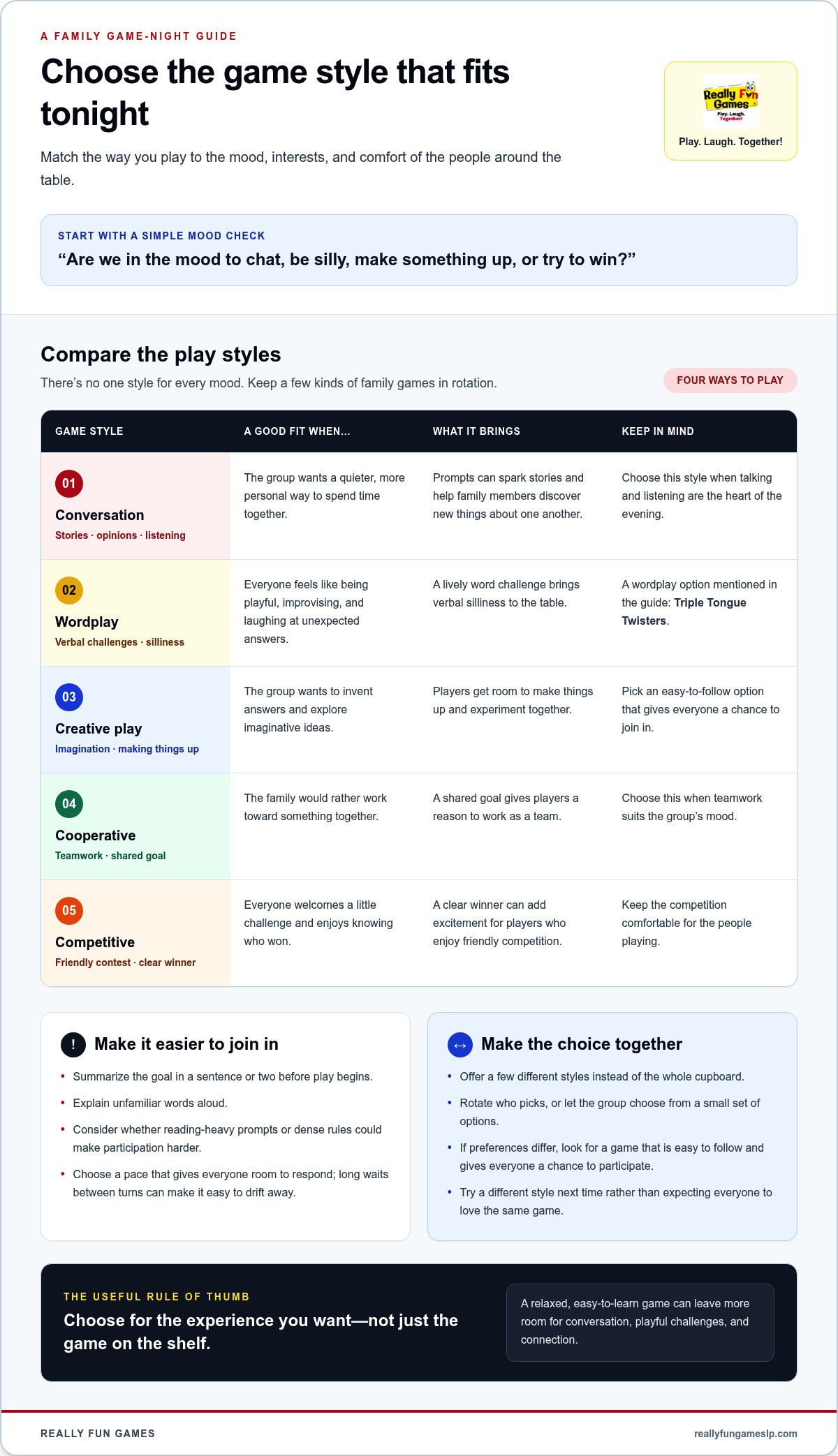
As you consider how to make family game night fun, think about the experience you want, not just the game on the shelf. Conversation games encourage stories and listening; wordplay brings playful vocal challenges; creative games invite imagination. Cooperative play gives everyone a shared goal, while competitive games can add excitement for players who enjoy a clear winner. For groups that want to get up and move, an active group game from 9 Square in the Air can bring high-spirited movement into the mix. No style suits every mood, so keep a few different kinds of family games in rotation.
Match the game style to the evening’s mood
Start with a quick mood check: “Are we in the mood to chat, be silly, make something up, or try to win?” Conversation card games can spark stories and help family members discover new things about one another. A wordplay game such as Triple Tongue Twisters brings verbal silliness to the table. If your group likes clear goals, choose a structured game with predictable turns. Matching the game to the mood can help everyone settle in.
Think about what could make participation harder, too. Reading-heavy prompts may slow the pace for players who find reading tiring, while dense rules can be difficult to remember before play begins. Frequent turns can keep players engaged, but long waits between turns may make it easy to drift away. Explain unfamiliar words aloud, summarize the goal in a sentence or two, and choose a pace that gives everyone room to respond.
- Conversation: Choose this style when stories, opinions, and listening are the heart of the evening.
- Wordplay or creative play: Try it when the group wants to improvise, experiment, and laugh at unexpected answers.
- Cooperative or competitive play: Pick a shared goal for teamwork, or a friendly contest when everyone welcomes a little challenge.
Make game selection a shared decision
Give the family a manageable choice instead of asking everyone to agree on every game in the cupboard. Rotate who picks, or offer a few different styles and let the group choose together. Before starting, explain the basic idea, how turns work, and what players are trying to do. Really?! Think You Know Me? Guess Again! is a conversation-game option for families who want playful interaction and a chance to learn how well they know one another.
If preferences differ, look for common ground: a game that’s easy to follow, gives players a chance to join in, and creates the kind of interaction the group wants. Trying a different style next time keeps the choice fair without forcing anyone to love the same game. Explore games that bring people together for more family-friendly options.
Keep Family Game Night Fun When Players Have Different Preferences
A family doesn’t need to enjoy the same game in the same way for everyone to share a good evening. One person may love keeping score, another may prefer listening before joining, and someone else might be happiest contributing a funny answer. Make room for those differences instead of treating them as a problem to solve. The aim is participation that feels comfortable, not identical reactions from every player.
Small adjustments can lower pressure without changing the heart of the game. Let someone help read a prompt, partner with another player, observe a round, or step in when ready. Explain the rules in plain language, then pause so questions feel welcome rather than like interruptions. Use a suggested age range to guide your choices: Really Fun Games’ titles are designed for ages 8 and up.
Welcome different ages and comfort levels
Notice how each person prefers to join. A quieter player might want time to think before answering; a younger participant may benefit from hearing an example; someone who’s unsure can watch the first turn. Offer these options casually, without asking a player to explain why they want them. Flexible turns, paired play, or a helpful role can make it easier for everyone to feel part of the group.
Handle competition and changing energy
Before a competitive game begins, agree on what “friendly” means for your family: celebrate clever moves, keep teasing kind, and remember that one round doesn’t define anyone. If winning starts to matter more than laughing together, soften the stakes. Try a shared goal, skip scorekeeping, or switch to conversation play. If attention fades, take a short break or finish on a cheerful moment rather than pushing through another round.
Use this quick guide when interest begins to dip:
- Adapt the game if players still enjoy its basic idea but need a lighter pace. Shorten a round, offer a partner, or make a rule easier to remember.
- Switch games if the group has lost interest in the core activity, even after a simple adjustment. Choose a different style or call it a night while the mood is still warm.
These choices help make family game night fun when energy and preferences don’t line up perfectly. For a lower-pressure alternative to a score-focused contest, a conversation game can shift attention toward listening, sharing, and discovering something new about one another. Explore family conversation games for options that encourage playful interaction.
Use a Simple Game-Night Flow to Keep the Fun Going
A little structure can help an evening find its rhythm without making it feel scheduled down to the minute. Think of the flow as a set of options, not a timetable: welcome everyone, start with something quick, move into a main game if the group is ready, then finish while the mood is still bright. Some nights may linger over one round; others may skip straight to a favorite activity. Let the players’ energy guide the order.
This flexible approach is one practical part of how to make family game night fun. It takes pressure off filling every moment and gives people a gentle way into play, even if they arrive at different times or need a while to warm up.
- Welcome: Give everyone a moment to arrive, settle in, and catch up. Let people know what’s available without rushing them to choose.
- Quick start: Begin with a simple, low-pressure activity that’s easy to explain and easy to join. A brief wordplay challenge or a conversation prompt can get voices going without committing the group to a long game.
- Main game: If players are engaged, move into the longer game you’ve chosen. Make the transition clear, then notice whether the pace and attention still feel comfortable.
- Cheerful close: Wrap up with a favorite moment, a shared laugh, or a quick check-in about what everyone enjoyed.
Start small and build momentum
A quick first round gives players a chance to understand the flow before the main game begins. Keep the instructions simple and let people try a turn without needing to master every detail upfront. Once the group feels settled, introduce the longer activity. If interest slips, don’t push through just because that was the plan. Change the style, return to a lighter activity, or call it a night.
Watch for small cues as you go. Are players leaning in, asking questions, and responding to one another? Or are turns dragging and attention wandering? These signals can help you decide whether to continue, simplify, take a pause, or switch activities. The plan should support the fun, not compete with it.
End on a moment the family wants to repeat
There’s no need to stretch the evening until everyone is tired of playing. Close with a quick question such as, “What was the funniest moment?” or “What should we try next time?” This gives quieter players a chance to share a thought and helps the family carry a happy memory into the rest of the evening. Keep the wrap-up brief, warm, and easy.
Choose family games for your next game night that fit your group’s mood and make it easy to begin, laugh together, and finish on a high note.
Bring Family Game Night to Life With Conversation and Play
The planning matters, but the game itself can give everyone a reason to lean in, share a thought, or laugh together. Look for something that’s easy to learn and enjoyable to return to, so more of the evening goes into playing and connecting instead of sorting out instructions. Replayable family games are handy because familiar favorites can feel fresh when different stories, guesses, and reactions come around the table.
Conversation and wordplay offer two distinct ways to bring a group together. A conversation game makes listening and sharing part of the fun, while a word challenge invites players to experiment with language and enjoy the inevitable stumbles. Really Fun Games creates award-winning games designed to bring people together through playful interaction.
Choose a game that invites everyone into the fun
For families who enjoy swapping stories and seeing how well they know one another, Really?! Think You Know Me? Guess Again! is a family conversation-game option. It offers a playful way to share opinions, make guesses, and discover new details about each other. The point isn’t to have the “right” answer to everything. It’s to enjoy the surprising conversations along the way.
If the group is in the mood for a vocal challenge, Triple Tongue Twisters offers a different kind of play. Tongue twisters turn a simple phrase into a funny challenge, giving players a chance to try again, cheer one another on, and laugh at tricky sounds. Either style can work as the main event or as a change of pace during a longer evening.
Use a quick check before choosing:
- Group mood: Are people ready to talk, think, or get silly?
- Play style: Would sharing and listening or a word challenge suit the moment?
- Ease: Can everyone understand how to join without a long explanation?
Make the next game night easy to plan
Keep the choice tied to the people who’ll be playing. Consider their ages, the energy in the room, and whether they prefer conversation, wordplay, teamwork, or a friendly contest. A game that fits tonight’s mood is more likely to help everyone settle into the fun than one chosen just because it’s familiar. If the group wants something different next time, switch styles. Variety keeps family game night from feeling like the same routine.
Learning how to make family game night fun doesn’t require a complicated plan or a perfect pick. Choose a game that helps your family connect, then leave room for laughter and conversation to unfold. Explore family and conversation games from Really Fun Games to find a playful fit for your next night together.
Let Your Next Game Night Grow From This One
A family game night doesn’t need to become a polished tradition overnight. Let each gathering offer a clue about what your family might enjoy next. Maybe someone wants to choose the next game, bring a new conversation prompt, or add a playful challenge. Those small suggestions give everyone a hand in shaping the experience and help keep it personal.
If you’re still wondering how to make family game night fun, start with curiosity rather than pressure. Ask what made people laugh, what they’d like to try again, or what could make the next get-together feel more welcoming. There’s no need to make every night a hit. A shared smile or an unexpected story is a lovely reason to gather again.
Choose a game that suits your family’s ages and mood, then make space for the moments that happen around it. Explore the Really Fun Games collection and find a playful spark for your next time together. Here’s to more laughter, connection, and happy surprises around the table.
Frequently Asked Questions
How often should we have family game night?
There’s no single schedule that suits every family. Pick a rhythm that feels enjoyable, then notice whether it’s easy to keep and whether people look forward to it. If regular weekly plans feel crowded, a less frequent gathering may work better. After a few game nights, ask whether the timing still fits. Treat the schedule as something your family can adjust, not a commitment you have to maintain perfectly.
What can I do if my family does not want to play?
Take “not tonight” at face value and avoid turning it into a debate. Later, ask what kinds of shared activities feel enjoyable to each person, or whether a particular part of game night puts them off. Their answers may point to a better fit for another occasion. A game night can also take a pause; giving the idea breathing room can help it feel inviting again rather than like an expectation.
Can family game night work with different age groups?
Yes, especially if the game doesn’t depend on everyone having the same knowledge or speed. Open-ended prompts, imaginative answers, and wordplay can let players contribute from different stages of life. Before choosing, consider whether the youngest participants can follow the activity and whether older players can enjoy it without needing a complicated challenge. The shared experience matters more than making every turn equally difficult.
How do you keep family game night from becoming too competitive?
Choose activities that don’t eliminate players early, so nobody has to sit out while the rest continue. If a close finish creates tension, agree beforehand that there won’t be a tie-breaker, or simply call the result a draw. Keep attention on the experience rather than the final score. A game can still feel exciting without making one person’s win or loss the main memory of the evening.
What should we do when everyone is tired of the same games?
Give a familiar favorite a rest instead of deciding it’s permanently out of rotation. Try a new theme or a different kind of challenge, then return to the old standby after some time has passed. You could also keep a short note of what the family has played and what prompted the best reactions. That record makes it easier to spot which games deserve a break and which ones are ready for another round.
Are conversation card games a good choice for family game night?
They can be a lovely fit for families who enjoy exchanging ideas and hearing different perspectives. To make prompts comfortable, favor light, everyday topics or imaginative “what if” questions, especially with a mixed-age group. Let people answer in their own way, and don’t press for personal details. A simple follow-up such as “What makes you say that?” can keep a conversation flowing while still respecting each player’s boundaries.
How can we make family game night easier to plan?
Keep a reusable note with a few details: a possible date, who’s hosting, and a game idea to consider. Update it after each gathering with a quick note about what the family enjoyed, so the next plan doesn’t start from scratch. Share the task of choosing or hosting rather than leaving one person to organize everything. For a ready-to-play option to add to your plans, explore the Really Fun Games collection. Have fun choosing your next family favorite!