

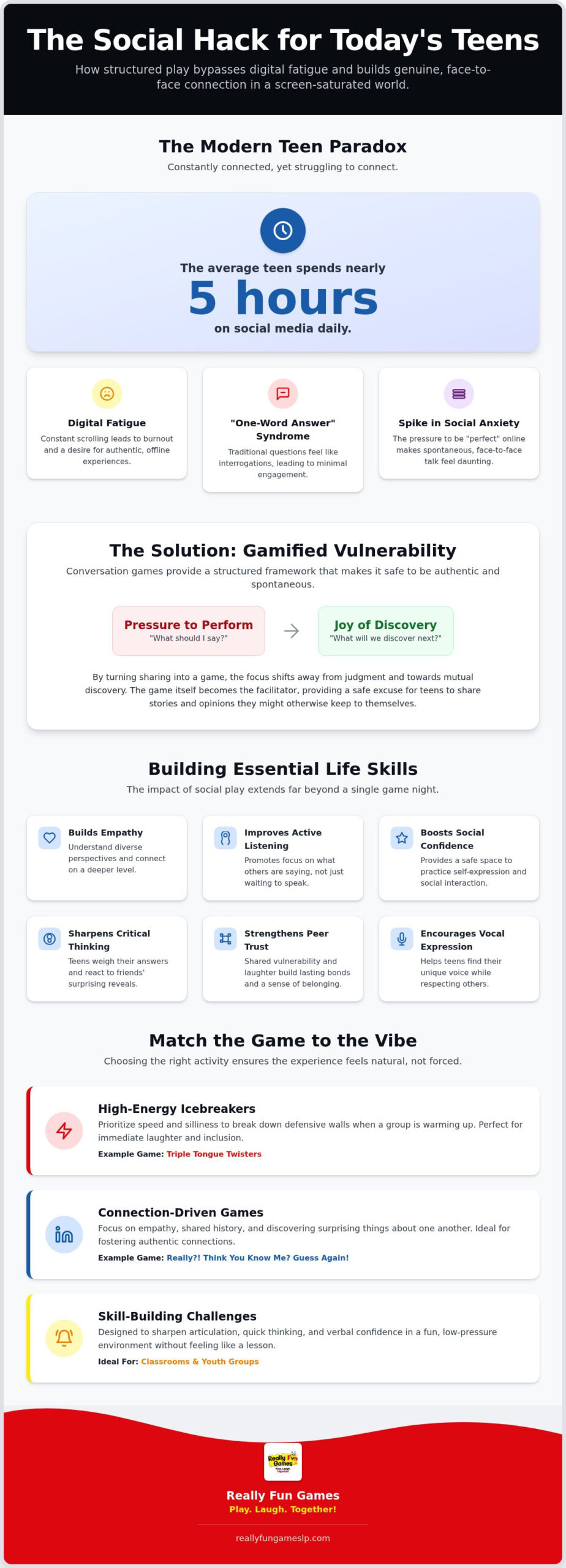
Did you know that the average teenager in 2026 spends nearly five hours every single day on social media? While they’re scrolling through YouTube and TikTok at record rates, many are simultaneously struggling with digital fatigue and a spike in social anxiety. It’s a strange paradox. They’re constantly connected, yet the simple art of face-to-face talk can feel incredibly daunting. You’ve likely experienced the “one-word answer” syndrome at dinner or those awkward silences that make finding effective conversation games for teens feel like a high-stakes mission. It’s tough to watch them miss out on the magic of real presence.
We believe that play is the ultimate social hack to bridge this gap. In this article, you’ll discover the most engaging, cringe-free ways to help them drop their guard and build genuine confidence. We promise to provide tools that swap screen time for laughter-filled gatherings, fostering empathy and active listening along the way. We’ll explore vibrant solutions like “Really?! Think You Know Me? Guess Again!” and show you how to create a safe space for vulnerability. Let’s turn those shy mumbles into moments of discovery and social harmony.
Key Takeaways
- Learn how structured play acts as a social hack to bypass awkward small talk and lower the barriers created by digital fatigue.
- Discover how to categorize conversation games for teens into high-energy icebreakers or deep-dive rounds to perfectly match your group’s current vibe.
- Explore award-winning solutions like “Really?! Think You Know Me? Guess Again!” that use gamified vulnerability to foster authentic connections without the cringe.
- Master simple facilitation techniques, such as starting with low-stakes questions and providing a relaxed environment, to ensure every teen feels comfortable opening up.
- Understand the lasting impact of physical card games on building active listening skills, empathy, and social confidence in a screen-saturated world.
Why Conversation Games for Teens are the Ultimate Social Hack
Conversation games for teens aren’t just a way to pass the time; they’re a powerful social hack designed to bypass the friction of modern interaction. As we move through 2026, many teenagers are feeling the weight of digital fatigue. While they’re constantly connected online, the spark of face-to-face connection often feels buried under layers of social anxiety and the performative nature of social media. Conversation games act as a bridge, providing a structured framework that makes it safe to be authentic and spontaneous in any group setting.
The magic lies in “gamified vulnerability.” When we turn sharing into a game, the pressure to be perfect vanishes. It shifts the focus from “What should I say?” to “What will we discover next?” This reduction in social anxiety is transformative. It allows teens to engage in vocal play and active listening without the fear of being judged. These games aren’t just about talking; they’re about building empathy and sharpening critical thinking as players weigh their answers and react to their friends’ surprising reveals. It’s about creating a vibrant space where everyone feels heard and valued.
Breaking the “One-Word Answer” Barrier
We’ve all been there. You ask, “How was your day?” and you’re met with a flat “Fine” or a silent shrug. Traditional questions often fail with teenagers because they feel like an interrogation or a chore. Game-based prompts change the dynamic entirely. Because the game is the facilitator, it provides a “safe” excuse for teens to share stories they might otherwise keep to themselves. It’s much easier to open up when the card is the one asking the question. Structured play acts as a social lubricant for introverted teens by transforming the pressure of performance into the joy of discovery.
The Long-Term Benefits of Social Play
The impact of these games reaches far beyond a single evening of fun. Engaging in regular social play builds a foundation of confidence that carries over into school, work, and future relationships. Teens learn the art of vocal expression, finding their own unique voice while respecting the perspectives of others. This process strengthens peer-to-peer trust and creates a resilient sense of belonging. For families, these games are a gateway to deeper understanding and lasting harmony. You can explore our award-winning options in this category by visiting our Games for Better Family Communication. By prioritizing these screen-free moments, you’re investing in a teen’s social health and emotional intelligence for years to come.
Categorizing the Best Conversation Games for Teenagers
Choosing the right activity isn’t just about picking a box off a shelf. It’s about reading the room. Teenagers are a dynamic group, and their social energy can shift from high-voltage excitement to quiet reflection in a heartbeat. By categorizing conversation games for teens based on their emotional outcome, you can ensure the experience feels natural rather than forced. Whether you need a spark of laughter or a bridge to deeper understanding, matching the game to the group’s “mode” is the key to success.
We generally look at three primary categories for teen engagement. First are the high-energy icebreakers that prioritize speed. Next are connection-driven games that focus on empathy and shared history. Finally, there are skill-builders designed to sharpen articulation and quick thinking. Each serves a unique purpose in fostering social harmony and confidence.
Icebreakers and High-Energy Starters
When a group is just warming up or dealing with those initial jitters, you need games that prioritize speed and silliness. Classic variants of “Would You Rather” or “Never Have I Ever” are fantastic because they require zero setup and offer immediate laughter. These silly challenges work wonders for breaking down defensive walls and making everyone feel included. If you’re hosting a larger event or a classroom session, you might want to explore our Icebreaker Games for Groups for more inspiration on managing bigger crowds.
High-energy starts also offer a hidden benefit: they are excellent skill-builders. For example, “Triple Tongue Twisters” is an absolute blast that forces players to focus on articulation and memory while they’re doubled over with laughter. It’s a great way to improve verbal confidence and clarity without it feeling like a formal lesson. It turns the struggle of a tangled tongue into a celebratory moment of group joy.
Connection-Driven Card Games
Once the ice is broken, it’s time to move toward deeper engagement. This is where connection-driven card games shine. Unlike “open floor” discussions that can feel like a spotlight of pressure, card-based prompts provide a structured path to vulnerability. They turn the act of getting to know someone into a playful challenge rather than a chore. This structure is especially helpful for introverted teens who might feel overwhelmed in an unstructured social setting.
Our flagship game, “Really?! Think You Know Me? Guess Again!”, is the gold standard for this category. It uses a “guessing” mechanic that tests how well friends or family members actually know each other. This creates instant engagement because it invites players to reflect on their shared history and build empathy through discovery. It’s not just about the answer; it’s about the “Really?!” reaction that follows a surprising reveal. This type of play fosters active listening and memory-making, turning a simple evening into a foundation for stronger bonds. If you’re looking to transform your next gathering, you can explore our collection of award-winning card games to find the perfect match for your group’s vibe.
Top 5 Conversation Games for Teens in 2026: A Roundup
The best conversation games for teens do more than just fill a silence; they create a shared language of laughter and discovery. In 2026, the demand for authentic, screen-free interaction has never been higher. When you are looking for activities that actually work, you need a mix of high-stakes strategy and lighthearted vocal play. We have rounded up the top five choices that promise to turn any awkward gathering into a memorable event.
The “Get to Know You” Champion: Really?! Think You Know Me?
Our top pick for any teen group is “Really?! Think You Know Me? Guess Again!” This game is a masterclass in engagement because of its unique “Guess Again!” mechanic. Unlike traditional question-and-answer formats, it forces players to pay close attention to their friends’ personalities and preferences. You aren’t just sharing your own stories; you’re predicting what others will say. This creates a constant feedback loop of surprises and “Really?!” moments that keep the energy high. It works beautifully for close-knit friend groups who think they know everything about each other, but it is equally effective for new acquaintances looking to break the ice quickly. You can find more details and purchase info at Our Games.
The Laughter Catalyst: Triple Tongue Twisters
If you want to see a group of teenagers double over in laughter, “Triple Tongue Twisters” is the ultimate solution. This game focuses on vocal play, using shared silliness to dismantle self-consciousness. There is something incredibly unifying about watching everyone struggle to pronounce a complex phrase. Beyond the immediate fun, these challenges offer significant benefits for speech development and verbal confidence. It turns the act of practicing articulation into a competitive, joyful experience. For a deeper look at the science behind the fun, check out How Tongue Twister Games Improve Speech. It is a fantastic tool for building social ease through collective failure and success.
High-Stakes and Quick Thinking
To round out your collection, consider these three additional styles of play that keep teens coming back for more:
- Social Deduction Games: These high-stakes games are perfect for teens who love drama and strategy. They require players to analyze body language and verbal cues to uncover “secret” identities, fostering deep focus and active listening.
- Tricky Tetra Tongue Twisters: A high-energy variation of our classic vocal play, this version adds layers of complexity that challenge even the most confident speakers.
- Blooming Tongue Twisters: Perfect for a more relaxed setting, this version maintains the spirit of discovery while keeping the tone light and celebratory.
When comparing these options, most are designed for groups of 2-8 players, making them ideal for small hangouts or larger family game nights. Their pocket-sized, card-deck format ensures they are highly portable for travel or school breaks. Because every group brings different answers and reactions, the replayability is virtually endless. These games aren’t just products; they’re investments in social health.
How to Facilitate Teen Conversation Games Without the Cringe
Success with conversation games for teens depends entirely on the atmosphere you create. You aren’t just a rule-follower; you are a social architect. To avoid the dreaded “cringe” factor, you must prioritize comfort over results. When teens feel pressured to perform, they retreat. When they feel invited to play, they shine. Follow these four steps to ensure your next session is a hit.
- Step 1: Set the stage. Choose a relaxed environment and provide plenty of snacks. Hunger is a primary barrier to engagement for most teenagers. A bowl of popcorn or a tray of sliders can instantly lower defenses.
- Step 2: Start with “Low Stakes.” Build momentum by using lighthearted, silly prompts first. Jumping into deep emotional territory too quickly can feel like an interrogation. Let the laughter lead the way.
- Step 3: The “Opt-Out” Rule. Explicitly state that anyone can pass on a question at any time. This safety net reduces social anxiety and actually encourages more participation because the “threat” of embarrassment is removed.
- Step 4: Lead by example. If you want them to be vulnerable, you must go first. Share a funny mistake or a genuine opinion. Your willingness to be real gives them the “social permission” to do the same.
Reading the Room: When to Switch Games
Keep a close watch on the group’s energy. If you notice wandering eyes, slumped shoulders, or a sudden silence, it is time to pivot. You might need to transition from a deep conversation to a high-energy round of tongue twisters to get the blood pumping again. If your group size changes, our Extra Number Dials allow you to expand or contract the game dynamically, ensuring no one is left out of the fun. Spontaneity is your best friend when managing teen social dynamics.
Creating a Screen-Free Zone
Digital fatigue is a real struggle in 2026. To truly spark connection, you need to gently implement a “phones in the basket” rule. Frame it as a gift of presence rather than a punishment. The tactile, sensory experience of card play offers a refreshing contrast to the flat surface of a smartphone. It grounds the players in the moment. For those times when you are on the move, check out The Best Travel Games for Kids for ideas on how to maintain this screen-free magic during road trips or flights. You can browse our full collection of connection-building games to find the perfect facilitator for your next gathering.
Elevate Your Next Teen Gathering with Really Fun Games
Physical card games are a lasting investment in the social health of your teenagers. In a world full of digital noise, these tactile tools offer a grounded, authentic way to connect that screens simply cannot replicate. Our award-winning collection focuses on screen-free interaction, ensuring that every round played is a step toward stronger friendships and deeper family harmony. We’ve designed these experiences to be easy to learn and quick to play, removing any barriers to immediate engagement.
We invite you to start your own tradition of meaningful play. By introducing conversation games for teens into your weekly routine, you’re creating a safe space where vulnerability is rewarded with laughter. It’s about more than just entertainment. It’s about building a legacy of communication and understanding that will serve them for a lifetime. Whether you’re a parent looking to reclaim dinner time or a teacher aiming to boost classroom confidence, these games are your secret weapon for success.
Why Our Games Stand Out
No two sessions are ever the same. Because our mechanics rely entirely on the unique personalities and stories of the people playing, the replayability is virtually infinite. Our games are thoughtfully crafted for ages 8 and up, making them the perfect companions for the transition from childhood into the more complex social world of adolescence. We position ourselves as the fun-loving facilitator, providing the structure and the spark so you can be the hero of the party. You don’t need to be an expert in social dynamics to lead a great session; you just need a deck and a willing group.
Choosing Your First Game
If your goal is to foster deep connection and see how well friends or family members actually know each other, start with Really?! Think You Know Me? Guess Again!. It’s a masterclass in building empathy through discovery. If you need to break the ice with high-octane energy and pure silliness, Triple Tongue Twisters will have everyone doubling over in laughter. For organizations, youth groups, or large families, the Really Fun Custom Games Bundle provides a versatile range of activities for any social setting. Your journey toward better connection starts with a single card. Discover the Really Fun Games Collection today and choose the perfect fit for your next family night or classroom event.
Ready to Spark Real Connection?
The transition from awkward silences to laughter-filled gatherings starts with a single card. You’ve discovered how structured play acts as a vital social lubricant, helping teenagers navigate digital fatigue and social anxiety with ease. By choosing the right “mode” of play and facilitating with a focus on comfort, you create an environment where authentic discovery happens naturally. Conversation games for teens are more than just entertainment; they’re essential tools for building empathy and confidence in a screen-saturated world.
Our award-winning designs have already helped over 100,000 families connect, and they come highly recommended by educators and SLPs. We’ve seen how these simple interactions transform classrooms and family rooms alike. It’s time to reclaim the joy of face-to-face interaction and make your next event truly unforgettable. Browse the Award-Winning Collection of Really Fun Games to find the perfect match for your group today. Let’s embrace the magic of play and build bonds that last a lifetime!
Frequently Asked Questions
What are the best conversation games for shy teenagers?
Structure is the secret to helping quieter teens open up. Games like “Really?! Think You Know Me? Guess Again!” are ideal because the card serves as the prompt, removing the pressure to “perform” or initiate. It provides a safe, playful excuse to share stories without feeling put on the spot. By shifting the focus to the game’s mechanics, shy players can participate at their own pace while building social confidence through discovery.
How do I make a conversation game feel less like an interview?
The key is to gamify the responses rather than just asking questions. Instead of a standard Q&A, use mechanics that involve guessing or friendly competition. Our “Guess Again!” feature turns a simple prompt into a challenge of how well you actually know your peers. This shifts the dynamic from an interrogation to a shared quest for discovery, ensuring the interaction feels like a joyful game night rather than a list of chores.
Are these games suitable for classroom icebreakers?
Yes, these tools are highly effective for educational settings and youth groups. Teachers often use conversation games for teens to foster empathy and sharpen critical thinking skills. For larger classrooms, you can split students into smaller circles of four to six players. Using the “Really Fun Custom Games Bundle” allows you to manage multiple stations simultaneously, turning a standard lesson into a vibrant, high-energy team-building session for the whole class.
Can conversation games help with social anxiety in teens?
These activities act as a powerful social hack by providing a predictable, low-stakes framework. Since the rules and prompts are clearly defined on the cards, teens don’t have to worry about what to say next or how to fill a silence. This structure reduces the cognitive load of social interaction. It allows them to practice active listening and vocal expression in a supportive environment that rewards authenticity over perfection.
What is the ideal group size for a teen card game?
Most of our award-winning titles are optimized for groups of 2-8 players. This size is large enough to create a diverse range of surprising answers but small enough to ensure everyone gets a turn to speak and be heard. If your gathering grows, you can easily incorporate “Extra Number Dials” to include more participants. This ensures the game stays fast-paced and inclusive without losing the intimate connection that makes play so valuable.
How long does a typical round of Really?! Think You Know Me? last?
A standard round usually takes between 15 and 30 minutes, but the game is designed for ultimate flexibility. You can play a single card for a quick five-minute icebreaker or keep the cards flowing for over an hour if the stories are particularly engaging. Because it’s easy to learn and highly portable, you can start or stop a round whenever the mood strikes, making it perfect for busy schedules.
Are there conversation games that also work for speech therapy?
Absolutely, and they are a favorite among professionals. Speech-Language Pathologists (SLPs) frequently use our “Tongue Twisters” collection to help teens work on articulation and verbal confidence. These games turn speech practice into a high-energy, laughter-filled challenge rather than a clinical exercise. It’s a fantastic way to improve speech clarity while the players are focused on the fun of winning, making the therapeutic process feel entirely organic and joyful.
How can I encourage teens to put their phones away during game night?
Lead by example and frame the experience as a gift of presence. When adults put their phones in a basket first, it sets a welcoming standard for the whole group. The tactile, sensory experience of physical conversation games for teens provides a much more engaging alternative to digital scrolling. When you combine the fast-paced energy of card play with a relaxed environment and great snacks, the phones are usually forgotten within minutes.
