

The best card games for 8 players or more aren’t always the ones with the biggest box or longest rulebook. In a lively crowd, long waits between turns can drain the fun. Unclear rules or an age mismatch can leave some guests on the sidelines. Look for a game that keeps people involved and makes it easy to join in.
It’s understandable to wonder which games can handle a large group without slowing down. A game’s listed player count matters, but so do quick turns, clear instructions, and a format that suits the people around the table. Choose well, and a game can spark laughter and conversation among family, friends, classmates, or teammates.
This guide will help you compare group size, pace, rules, and age fit for your gathering. It also explains why a game designed for eight or more players is different from one that might be adapted. Really Fun Games’ Really?! Think You Know Me? Guess Again! is designed for 2-6 players, so check its official player guidance before considering it for a larger group.
Key Takeaways
- Look beyond the maximum player count. Compare turn structure, interaction, age guidance, and rule complexity to find a game that suits your group.
- When comparing card games for 8 players or more, check the manufacturer’s stated player range rather than assuming an easy-to-learn game will work for a crowd.
- Keep game night flowing by arranging seating so everyone can hear instructions and see shared materials. Consider a practice round if it would help.
- Match the game’s style to the occasion, whether your group wants lively teamwork, conversation, or a relaxed family gathering.
- Really Fun Games creates family, conversation, and educational games for ages 8 and up. Check each title’s player guidance to see if it fits your gathering.
Why card games for 8 players or more need a different kind of game flow
A crowded table doesn’t automatically make a game enjoyable for everyone. Players need a fair chance to take part, understand what’s happening, and stay interested between turns. For a large group, check both the game’s stated player count and whether its turn structure suits the people and occasion.
Card games vary in their components, rules, and ways of playing. A general introduction to card games can help explain that variety, but it won’t confirm whether a particular title supports your group size. Check the game’s official player range before deciding.
What makes a card game work for a large group?
Look for rules a host can explain clearly without a lengthy briefing. Frequent turns can reduce waiting, while shared responses or team play may give people something to do when they aren’t the active player. The aim is a steady rhythm: listen, act, react, and enjoy the moment together.
Use these as selection criteria, not assumptions about a specific game. Read the official instructions and product details to see how participation works, how turns pass, and whether players stay involved. A game can be easy to learn and still have a player limit that doesn’t fit your gathering.
Who is choosing the game, and what is the occasion?
The right choice depends on who’s playing and what you want from the event. At a family gathering, a wide age range may make simple instructions and low-pressure participation especially valuable. In a classroom or organized group, consider whether the format supports teamwork, listening, or communication. At a party, a lively pace and easy entry for newcomers may matter more.
Before choosing, ask yourself: How old are the players? Have they played similar games before? Will everyone feel comfortable speaking in front of the group? How much time do you have? Your answers can narrow the options and help you avoid a game that feels too demanding or slow for the occasion.
If you’re looking beyond card games for ways to help a group connect, explore these family and conversation games. For any large-group choice, verify the official player count instead of inferring it from the game’s general audience. That quick check can help make game night smoother and more welcoming.
How to compare card games for 8 players or more before choosing
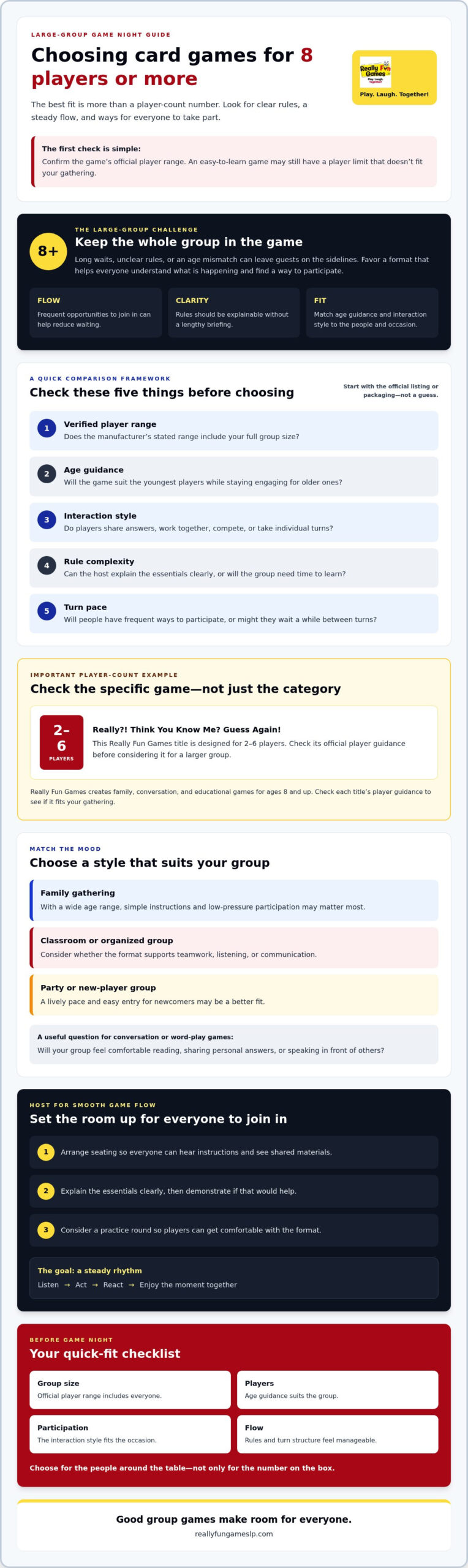
A quick comparison can prevent you from buying a game that looks right but leaves some of the group watching. For card games for 8 players or more, make a shortlist and compare the details that affect fit and flow. Start with the manufacturer’s stated player range, then check age guidance, interaction style, and how easily your group can learn the rules.
Use these questions to compare your options:
- Verified player range: Does the official listing include your full group size?
- Age guidance: Is the game a comfortable fit for the youngest players and still engaging for older ones?
- Interaction style: Do players share answers, work together, compete, or take individual turns?
- Rule complexity: Can the host explain the essentials clearly, or will the group need time to learn?
- Turn pace: Are there frequent ways to participate, or could players wait a while between turns?
Which game features matter most in a group of eight or more?
Confirm the player count on the product listing or packaging first. Then look for opportunities for people to respond often, such as shared prompts, team decisions, or quick rounds of participation. These formats can help keep attention moving around the group instead of focusing on one player for an extended stretch.
Rule complexity matters, too. Consider whether the host can explain the game without a long briefing and whether new players can follow after a demonstration. Michigan State University’s Icebreakers, Team Challenges, and Other Group Games offers broader ideas for choosing group activities that encourage participation.
Will a conversation or word-play game suit your group?
Really Fun Games titles such as Really?! Think You Know Me? Guess Again! and Triple Tongue Twisters offer different styles to consider. Their stated standard player range is 2-6, so don’t assume either is a standard fit for a group of eight or more. Check the official listing for current player guidance and any relevant options. You can explore Really Fun Games titles as you compare formats.
Quick takeaway: Confirm the player count first, then compare pace and participation. This helps you find a game that fits your group on paper and feels welcoming once everyone sits down.
Will a card game really work for 8 players or more? Check these details
Yes, some card games are designed for larger groups, but don’t assume a game supports eight players just because its rules are easy to learn or its theme suits a crowd. A simple game can still have a firm player limit. For card games for 8 players or more, verify the supported range and age guidance before buying. Then consider whether the game’s reading, speaking, or performance demands suit everyone you hope to include.
How can you verify a game’s player count?
Check the manufacturer’s product page or the game packaging for the stated minimum and maximum. If the player count or age guidance is missing or unclear, ask the seller or manufacturer before purchasing. Reviews and informal play variations may offer ideas, but they don’t prove that a game officially supports a larger group.
Use this quick check:
- Does the stated player range include your group? If not, choose another game rather than treating a house rule as official support.
- Does the age guidance fit the players? Consider the youngest participants as well as the group overall.
- Are the instructions and participation style a good match? Consider reading demands, speaking aloud, and how comfortable players may feel taking a turn.
For example, Really Fun Games’ Really?! Think You Know Me? Guess Again! and Triple Tongue Twisters are designed for 2-6 players. They shouldn’t be presented as officially supporting a group of eight or more. You can review Really Fun Games titles and check each product’s details to see whether its stated range fits your plans.
What if the group includes mixed ages or different comfort levels?
A suitable player count is only one part of a good fit. Check whether the game expects players to read prompts, answer personal questions, or perform aloud. A lively word game might delight guests who enjoy speaking up, while a quieter group may prefer a format that lets people respond in less public ways. Look for clear instructions and room for participants to join at their own pace.
For families, teachers, and group leaders, a game can create an opportunity to listen, communicate, and laugh together, without promising a particular learning or developmental result. Familiar card games can also help you see how rules work. Britannica’s Crazy Eights rules describe a recognizable format, but a familiar game won’t automatically fit your group size. Confirm the player range and any deck requirements for the version you plan to use.
How to host a smooth card-game night with 8 players or more
A little planning helps a big group settle in and enjoy the game together. Before guests arrive, confirm the game’s official player range and check that you have everything its instructions call for. Arrange the space so everyone can see shared materials and hear the host. For card games for 8 players or more, clear sightlines and a comfortable layout can help play get underway smoothly.
- Prepare the space: Arrange seats so players can see the cards or other shared materials. Leave enough room for people to move comfortably.
- Explain the basics: Start with the goal, then describe the first actions players will take.
- Try a practice round: If it would help, walk through a sample turn before starting play in earnest.
- Keep the pace friendly: Name who goes next and briefly restate a rule when someone needs a reminder.
If you adjust a game for your gathering, make clear that the change is a house rule or host choice, not an official rule or product feature. Explain the adjustment before play begins, and be ready to switch games if the group isn’t enjoying the format.
How do you explain the rules without losing the group?
Keep the opening explanation focused. Tell everyone what they’re trying to do, then cover only the first actions needed to begin. If a turn is easier to show than describe, demonstrate one using the actual materials. Invite questions before starting, and keep the official instructions nearby so you can check details instead of guessing. A short practice round lets players learn by doing without turning the introduction into a lengthy rules briefing.
How can you keep everyone included as play begins?
Set a welcoming tone from the start. Some guests may want to watch or listen before speaking, reading aloud, or performing. Give them room to join when they’re ready, and pause for clarifications rather than letting confusion build. To keep turns clear, announce the next player and offer a quick reminder of what happens next.
If guests could use a warm-up before sitting down to play, try these large-group icebreaker ideas. Then choose a game that suits the gathering, and make sure any changes are clearly identified as your own house rules. For more ideas centered on conversation and shared play, explore Really Fun Games.
Choose card games for 8 players or more that bring your group together
The best choice for a large gathering balances three things: a verified player count that covers your group, a format that suits the occasion, and rules people can follow without losing the fun. Think about the mood you want. Is the goal a burst of laughter, friendly competition, or a chance for family and friends to share stories? The right game helps everyone feel part of the moment, not just seated around the same table.
Which Really Fun Games options should readers explore?
Really Fun Games creates award-winning family, conversation, and educational games for ages 8 and up, with an emphasis on communication and shared play. Really?! Think You Know Me? Guess Again! is a conversation-game title, while Triple Tongue Twisters brings word play into the mix. Both may suit a smaller gathering or offer inspiration as you compare styles, but don’t assume either is an eight-player game. Their stated standard player range is 2-6, so check the official listing for current guidance and don’t mistake them for games designed for eight or more in standard play.
Explore the Really Fun Games collection to review these titles and their product details. Confirm the player count and age guidance for the exact game you’re considering. The brand’s general age guidance shouldn’t replace the details on an individual listing.
What should shoppers confirm before they buy?
Use this final check before choosing:
- Player count: Does the official range include everyone who’ll play?
- Age guidance: Is the game suitable for the youngest players in your group?
- Format and rules: Do they fit the occasion and feel manageable for your guests?
- Group goal: Will the experience encourage the laughter, conversation, or teamwork you’re hoping for?
For card games for 8 players or more, these checks can help turn a crowded gathering into a shared experience. Find a format that welcomes your group, then let the conversation, playful challenges, and laughter follow.
Make Your Next Group Game Night a Shared Win
A great large-group game does more than fit everyone at the table. It gives people a clear way to join in, keeps the pace comfortable, and suits the ages and energy in the room. Before choosing card games for 8 players or more, confirm the official player range, check age guidance, and consider how often everyone gets to participate.
Really Fun Games creates award-winning family, conversation, and educational games designed for ages 8 and up. Titles like Really?! Think You Know Me? Guess Again! and Triple Tongue Twisters offer conversation and word-play styles to explore. Check each game’s listing for player-count details and age guidance to see whether it fits your gathering.
Ready to add more laughter, conversation, and connection to game night? Explore the Really Fun Games collection and find a game that brings your group together. Let the fun begin!
Frequently Asked Questions
Can card games be played with 8 players or more?
Yes, some card games are designed for larger groups, but player limits vary by game. Before buying, check the official player range on the product listing or packaging and make sure it includes everyone who plans to play. Don’t assume a game accommodates extra players because it’s easy to learn or players have suggested flexible house rules. For card games for 8 players or more, rely on the manufacturer’s stated guidance.
What makes a card game good for a large group?
A good candidate has an official player count that fits, clear rules, manageable turns, and opportunities for everyone to participate. Those features can help the game flow, but they don’t guarantee that every group will enjoy it. Consider the players’ ages, the occasion, and the group’s preferences. Some gatherings may enjoy conversation and sharing, while others may prefer word play, quick responses, or another kind of interaction.
How do I choose a card game for a family gathering with 8 or more people?
Start by checking the game’s official player range and age guidance. Then think about what your family enjoys and what will feel comfortable for different ages and personalities. Clear rules are easier to explain, and frequent opportunities to respond can help keep people involved. Consider whether your group prefers conversation, word play, or another format. Don’t describe a game as suitable unless its official player count includes your group.
Are conversation card games suitable for large groups?
They can suit groups that enjoy sharing ideas, but it depends on the specific game’s player count and format. Consider whether participants feel comfortable speaking in front of others and whether turns are clearly structured. Really?! Think You Know Me? Guess Again! is a conversation-game title to investigate, not a confirmed recommendation for eight players. Its standard player range is 2-6, so check the listing before choosing it for your gathering.
How can you keep a card game moving with 8 players or more?
Explain the goal first, then show a sample turn if that’s easier than describing the steps. Keep the official rules nearby, make the turn order clear, and use a comfortable pace so players can follow along. Brief reminders can help everyone stay on track without interrupting the fun. These hosting tips can support smooth play, but they don’t change a game’s official player limit or rules, so confirm those before starting.
What should I check before buying a card game for a big group?
Verify the official minimum and maximum player count, age guidance, and rules before purchasing. Then consider whether the game’s format matches the gathering and participants’ interests, such as conversation, word play, or friendly competition. If the player-count information is missing or unclear, ask the seller or manufacturer for confirmation. Don’t rely on assumptions, reviews, or informal adaptations as proof that a game supports your group size.
Ready to bring more conversation and laughter to your next gathering? Explore the Really Fun Games collection and find a game that suits your group.
