What if better conversations started with a laugh instead of a lesson? Games to improve communication skills give people a relaxed way to practise listening, sharing ideas, and taking turns. A clear prompt or playful challenge can make it easier to join in, especially when direct conversation feels awkward or overly structured.
Whether you’re planning family game night, choosing a classroom activity, or looking for a group icebreaker, the right format can help people connect at their own pace. This guide explains what to look for, how to make play welcoming, and how different games can invite conversation or vocal play. For example, Really Fun Games’ award-winning Really?! Think You Know Me? Guess Again! encourages players to learn about one another, while Triple Tongue Twisters adds a lighthearted speaking challenge.
Key Takeaways
- Games to improve communication skills offer playful opportunities to listen, share ideas, and respond. They don’t guarantee outcomes or replace professional support.
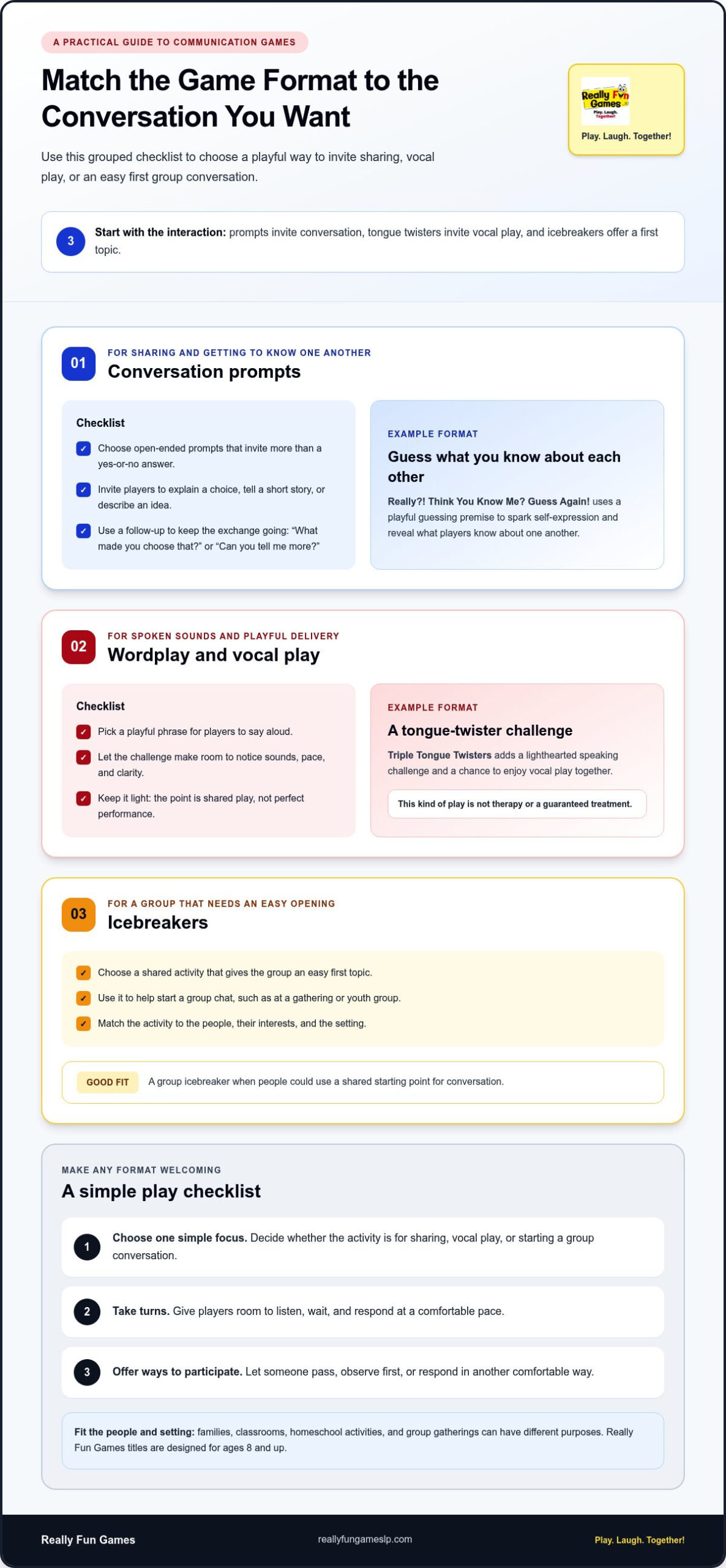
- Choose a format for the interaction you want to invite: conversation cards encourage sharing, wordplay invites vocal play, and icebreakers help start a group chat.
- Make play welcoming by choosing one simple focus, taking turns, and letting participants pass, observe first, or respond another way.
- Match the game to the people and setting, whether you’re planning family game night, a classroom activity, or a group gathering.
- Really Fun Games’ award-winning physical card games bring people together through communication, teamwork, and play.
Games to Improve Communication Skills: What They Can Help People Practice
A conversation doesn’t need to begin with a big question or a formal lesson. A card prompt gives everyone something to react to, making it easier to take a first turn, hear another point of view, and add a thought of their own. That bit of structure can make interaction feel more relaxed, especially for people who aren’t sure what to say next.
Communication games are playful activities that invite people to exchange ideas, listen to one another, and respond. Unlike entertainment focused only on winning or passing time, these games make interaction part of the play. The goal isn’t to perform perfectly. It’s to create comfortable opportunities to practise everyday communication.
Games to improve communication skills can offer useful practice, but they don’t guarantee a particular result or replace individualized support from an SLP or another professional. Social skills include the ways people interact and communicate; the communication skills overview offers a broader introduction to the topic.
Which communication skills can games encourage?
Game turns make several small behaviors visible. Players can practise waiting while someone else speaks, responding when it’s their turn, and making room for a quieter participant. Listening gets a workout when a player remembers a detail and asks a follow-up question instead of simply waiting to speak.
Prompts also invite self-expression. A player might explain a choice, tell a short story, or describe an idea so others can understand it. Wordplay games such as Really Fun Games’ Triple Tongue Twisters add a playful vocal challenge. These moments offer opportunities to share and respond without expecting everyone to communicate in the same way.
Who can play communication games?
Families might use a conversation game to learn something new about one another. Teachers and homeschoolers may want a lively way to encourage turn-taking or discussion. Youth leaders can use a shared activity to help a group get talking, while SLPs may choose games that fit an individual’s communication goals. The purpose can differ, even when everyone is playing together.
Choose an activity with participants’ ages, interests, and comfort in mind. Let people pass, observe first, or respond in a way that feels comfortable. Really Fun Games’ titles are designed for ages 8 and up, including Really?! Think You Know Me? Guess Again!, which invites players to share and discover what they know about one another. Browse the Really Fun Games collection for physical card games made for shared play.
How Communication Games Turn Listening, Speaking, and Sharing Into Play
A game mechanic can make a communication behavior easy to spot. Taking turns gives players a reason to pause and listen; a prompt invites someone to explain an idea; and a response can show whether they heard what another person said. These small moments make communication games useful for practice without turning every move into a lesson.
A turn-taking game creates repeated opportunities to listen, wait, and respond to another person. Over the course of a game, players can contribute in different ways, whether they share a story, ask a question, or take a moment before speaking. Keep the pace comfortable: participation is an invitation, not a test.
Games to improve communication skills can encourage conversation, but playing isn’t a clinical assessment and doesn’t promise specific skill gains. Families and educators can enjoy the interaction for its own sake, while SLPs can decide whether a game fits an individual’s goals and professional support.
For more ideas involving children, PBS shares activities such as charades and role-play in its guide to Games to Improve Communication Skills. The common thread is active participation: players do something, notice how others respond, and get another chance to join in.
Conversation prompts and get-to-know-you play
Open-ended prompts invite more than a yes-or-no answer. A player might describe a favorite way to spend a free afternoon or explain why they chose a particular answer. In Really?! Think You Know Me? Guess Again!, the playful guessing premise can spark self-expression and reveal what players know about one another. Keep the exchange going with follow-ups such as “What made you choose that?” or “Can you tell me more?” That turns a prompt into a conversation instead of a card read and set aside.
Wordplay, articulation, and vocal confidence
Saying a playful phrase aloud invites players to notice sounds, pace, and clarity, especially when a tongue twister gets everyone laughing over a tricky phrase. Triple Tongue Twisters offers a lighthearted way to enjoy vocal play. It isn’t therapy or a guaranteed treatment, but it can add a fun speaking moment to shared play. Explore more about tongue twister games and speech confidence, then browse Really Fun Games’ card games for another playful way to connect.
Are Communication Games More Than Just Fun? Match the Format to the Goal
Play can be enjoyable and still invite useful communication practice. The format shapes the opportunity: a prompt can spark a story, a tongue twister can get players experimenting with spoken sounds, and an icebreaker can give a group an easy first topic. The value comes from how well the activity fits the people playing and whether they feel comfortable joining in, not from a promise of particular results.
Play doesn’t have to feel like a formal lesson to create a moment for listening, speaking, or sharing. William & Mary’s article on how play and games can support well-being offers a broader perspective on the value of play. Use the comparison below to choose a format based on the interaction you want to invite.
| Format | Communication opportunity | Suitable setting |
|---|---|---|
| Conversation cards | Share an opinion or story, listen for details, and ask a follow-up question | Family game night, classrooms, or small groups |
| Wordplay games | Experiment with spoken sounds, pacing, and saying a phrase aloud | At home, in a group, or as a playful classroom activity |
| Icebreakers | Begin talking through a light prompt or shared activity, without requiring personal disclosure | New groups, social gatherings, or team activities |
Conversation card games for sharing and listening
Conversation cards can turn a broad question into an invitation to share a preference, explain a choice, or tell a story. The next player can listen for one detail and ask about it, helping the exchange grow naturally instead of moving straight to the next card. Really?! Think You Know Me? Guess Again! fits this conversational format by encouraging players to express themselves and discover what others know about them.
Wordplay and icebreakers for different groups
Tongue twisters bring a lively burst of vocal play. Players can try saying a tricky phrase and enjoy the sound without treating the activity as therapy or expecting a specific outcome. For groups that are just getting started, choose an icebreaker that lets people join in without sharing anything personal. Find more ideas in this guide to icebreaker games for groups and social gatherings.
Choose a game that people will enjoy playing together. Really Fun Games offers playful ways to bring people together.
Using Communication Games at Home, School, or in Groups
A little structure helps a game feel welcoming without making it feel like a lesson. Before you begin, decide what kind of interaction you’d like to invite, keep the instructions simple, and make room for different ways to take part.
- Choose one goal. Focus on something observable, such as taking turns, sharing an idea, or asking a follow-up question.
- Explain the activity simply. Give a quick example of a turn so players know what to expect.
- Take turns flexibly. Players can answer, pass, observe first, or respond another way that feels comfortable.
- Reflect together. Ask what made the activity enjoyable or what someone learned about another player.
This routine can work in different places with small adjustments. For family game night, choose a light prompt that grandparents, parents, and kids can all answer in their own way. In a classroom, invite students to take turns sharing a thought before moving on. Homeschoolers might use a game as a lively conversation break, while a facilitator can use group play to help participants get comfortable interacting. The point is connection, not correcting every response or requiring everyone to speak.
Make it comfortable for different ages and personalities
Start with familiar topics, and let players decide how much they want to share. A brief answer from the facilitator can show what a turn might sound like without setting a standard everyone must match. Leave a little thinking time before moving on, keep rules easy to follow, and slow the pace if the group needs it. Comfort matters more than keeping the game moving quickly.
Turn a round of play into a conversation
After an interesting answer, invite another player to ask one follow-up question. It might be as simple as “What do you like about that?” or “How did you decide?” Reflect the speaker’s idea before offering a different view: “So you enjoy the quiet part of the trip. I like the music.” That small pause shows attention and helps everyone respond to what was actually shared.
Games to improve communication skills work best when participation feels voluntary and curiosity leads the way. Choose a game that fits your group and the kind of interaction you hope to encourage. Explore communication games for your group and make room for a few fresh conversations.
Choose Communication Games That Bring People Together
The right game depends on who’s playing, what kind of interaction you’d like to invite, and where you’ll play. A family gathering might call for questions that help relatives share stories, while a classroom or friendly group may benefit from a playful way to spark conversation. For vocal play, choose an activity that gets players speaking and laughing together.
There’s no single format that suits every group. Consider whether players enjoy answering questions, telling stories, guessing what others think, or experimenting with tricky phrases. Keep the aim simple: make it easy for everyone to join, respond, and enjoy time together. Games to improve communication skills should create inviting opportunities to connect, not pressure anyone to speak or promise a particular result.
Really Fun Games creates award-winning physical card and conversation games designed to bring families, friends, educators, SLPs, and groups together. Its titles are designed for ages 8 and up, making them an option for shared play across different settings.
When a conversation game is the right fit
Choose question-led play when you want to hear opinions, swap stories, and learn something new about one another. A prompt can give a family gathering an easy conversation starter, help a classroom discussion feel more lively, or add a shared focus to a friendly group activity. Players can build on an answer by asking a follow-up or sharing a related thought.
Really?! Think You Know Me? Guess Again! is a conversation-game example that invites players to express themselves and discover what others know about them. Explore the Really Fun Games collection to see games made for playful connection.
When wordplay is the better match
If the group would rather play with sounds than answer personal questions, try a tongue twister. Triple Tongue Twisters offers a playful spoken-language activity where players can take turns saying tricky phrases and enjoy vocal experimentation together. It’s a different kind of interaction: less about telling a story, more about speaking aloud and sharing a laugh.
Think about what will feel natural for your players. Do they want conversation, or would they rather get their voices moving with wordplay? Choose the format that fits their interests and the occasion, whether you’re planning family game night, a classroom activity, or a relaxed group get-together. Ready to bring everyone into the fun? Discover games for communication and connection.
Make Your Next Game a Chance to Connect
The best games to improve communication skills make it easier to join in, listen closely, and share at your own pace. Choose a format that suits the people playing and the moment: conversation prompts can open the door to stories, while wordplay offers a lively way to enjoy speaking together. Keep the atmosphere relaxed, and let curiosity lead.
Really Fun Games is an award-winning creator of family, conversation, and educational games designed for ages 8 and up. Easy to learn and highly replayable, titles such as Really?! Think You Know Me? Guess Again! and Triple Tongue Twisters bring different kinds of playful interaction to the table.
Ready to turn shared play into memorable conversations and plenty of laughs? Explore the Really Fun Games collection and find a game that fits your family, classroom, or group. Every great connection can start with one playful turn.
Frequently Asked Questions
Is playing games an effective way to practice communication skills?
Yes, games can create relaxed opportunities to take turns, listen, explain ideas, and respond to others. What players practise depends on the activity and how it’s facilitated. For example, a conversation prompt can invite someone to share an opinion while another player listens and asks a follow-up question. Treat games as one enjoyable way to encourage interaction, not as a guarantee of progress or a replacement for individualized professional support when it’s needed.
What games help improve communication skills?
Choose games that invite players to speak, listen, ask questions, or explain their thinking. Conversation card games can spark stories and opinions, while wordplay games invite players to experiment with spoken sounds. Games to improve communication skills work best when they suit the people playing and feel enjoyable. A question-led game such as Really?! Think You Know Me? Guess Again! offers one way to share and learn about one another.
Can communication games help shy children feel more comfortable talking?
A game may make starting a conversation feel easier for some children because it provides a shared focus and a clear turn-taking structure. Keep participation low-pressure: let a child pass, watch first, or give a brief answer. Choose familiar topics that match their interests, and avoid treating quiet participation as a problem to fix. The aim is to make connection inviting, not to require a certain amount of talking.
How do you use communication games in a classroom or homeschool setting?
Choose a simple activity, explain how turns work, and model an example before play begins. Set one manageable focus, such as listening for a detail or asking a follow-up question. In a classroom or homeschool group, offer ways to participate that don’t require everyone to answer aloud. Keep the emphasis on respectful interaction and curiosity. Avoid evaluating every response so the activity stays welcoming and enjoyable.
Are communication games suitable for speech therapy sessions?
What age can children start playing Really Fun Games?
Really Fun Games’ titles are designed for ages 8 and up, and adults can join in too. A shared round can bring kids, parents, educators, and other players together around conversation or playful wordplay. Choose a game that fits the group’s interests and comfort, then make participation flexible. Players can listen, answer briefly, or pass when appropriate, helping keep the experience enjoyable for everyone at the table.
Do communication games need to feel like a lesson?
No, communication games can feel like play while naturally inviting conversation, listening, or wordplay. Keep the instructions clear, let players respond in their own way, and resist interrupting each turn to correct or assess. For example, a prompt can lead to a story, and a follow-up question can keep the exchange going. A light touch helps the group focus on sharing the moment, laughing, and connecting.
