The best classroom card game is one that fits your learning goal, not just your subject. Card games for teachers can add energy to a lesson, but a lively activity should do more than fill time. Look for a format that gives students a clear way to take part while keeping the lesson focused and making room for different communication styles.
Start by deciding what kind of participation you want: sharing ideas, listening, practising teamwork, or thinking critically. Conversation games can give students a shared prompt for discussion, while Really Fun Games’ award-winning titles, including Really?! Think You Know Me? Guess Again! and Triple Tongue Twisters, encourage interaction through play.
This guide shows you how to match a game format to your classroom goal, choose an activity that suits your group, and introduce it with a simple routine. With a clear purpose and a little laughter, students can learn and connect as they play.
Key Takeaways
- Choose card games for teachers by matching the format to your learning purpose, students’ age, group setup, rules, and available time.
- Compare standard decks, conversation games, and vocal-play games by considering how students will participate and what you want them to practise.
- Launch play with a simple routine: explain the purpose and rules, model a turn, and check that students know what to do.
- Really Fun Games creates award-winning communication and educational games for ages 8 and up, including Really?! Think You Know Me? Guess Again! and Triple Tongue Twisters.
- Give students a structured chance to communicate and work together, with more than one comfortable way to join in.
Why Card Games for Teachers Can Make Classroom Learning More Engaging
A classroom card game is a structured activity that gives students a shared focus and a clear way to participate. Depending on the format, students might discuss an answer, wait for a turn, or work through a challenge together. The shared rules can help make participation easier to understand and give more students an opening to contribute.
A classroom card game uses cards, shared rules, and student participation to practise a skill or encourage interaction. The learning purpose matters. If you add a game without connecting it to the lesson, the activity can feel like a break rather than part of learning. Before play, decide what students will practise and how the game gives them a chance to do it. For a wider overview, Wikipedia’s article on educational games discusses how games can be used in learning environments.
What can students practise through classroom card games?
Look beyond the subject on the timetable. A card activity can create opportunities for academic thinking, language use, and social interaction. Students might sort or compare cards, explain their reasoning to a partner, or respond to a conversation prompt. Choose an activity that gives them a concrete way to practise the skill you have in mind.
You can also set a specific interaction goal. For example, ask students to listen while a classmate speaks, take turns, explain an answer, or consider different possibilities before responding. Make expectations clear and give students a moment to think before asking for an answer aloud. A game creates a setting for practice, while each student’s experience will differ.
When does a card game fit better than a worksheet?
A worksheet offers space for individual, written practice. A card game can shift the focus to shared participation, with students responding to one another as well as to the task. That makes a game a useful option when the goal includes conversation, collaboration, or explaining an idea aloud. It offers a different kind of practice, not a replacement for written work.
For example, use a short round to discuss vocabulary or compare possible answers, then follow up with independent writing. In another lesson, quiet worksheet time may suit the task better. Choose based on the learning goal, the students’ needs, and the time available for explaining, playing, and reflecting.
Make the connection clear by naming the goal before dealing the cards: “Listen for a different point of view,” or “Explain how you reached your answer.” After the round, ask students to share how the game related to that goal. Teachers exploring purchasable communication and educational games can find formats designed to bring people together through play.
How to Choose Card Games for Teachers and Their Classroom Goals
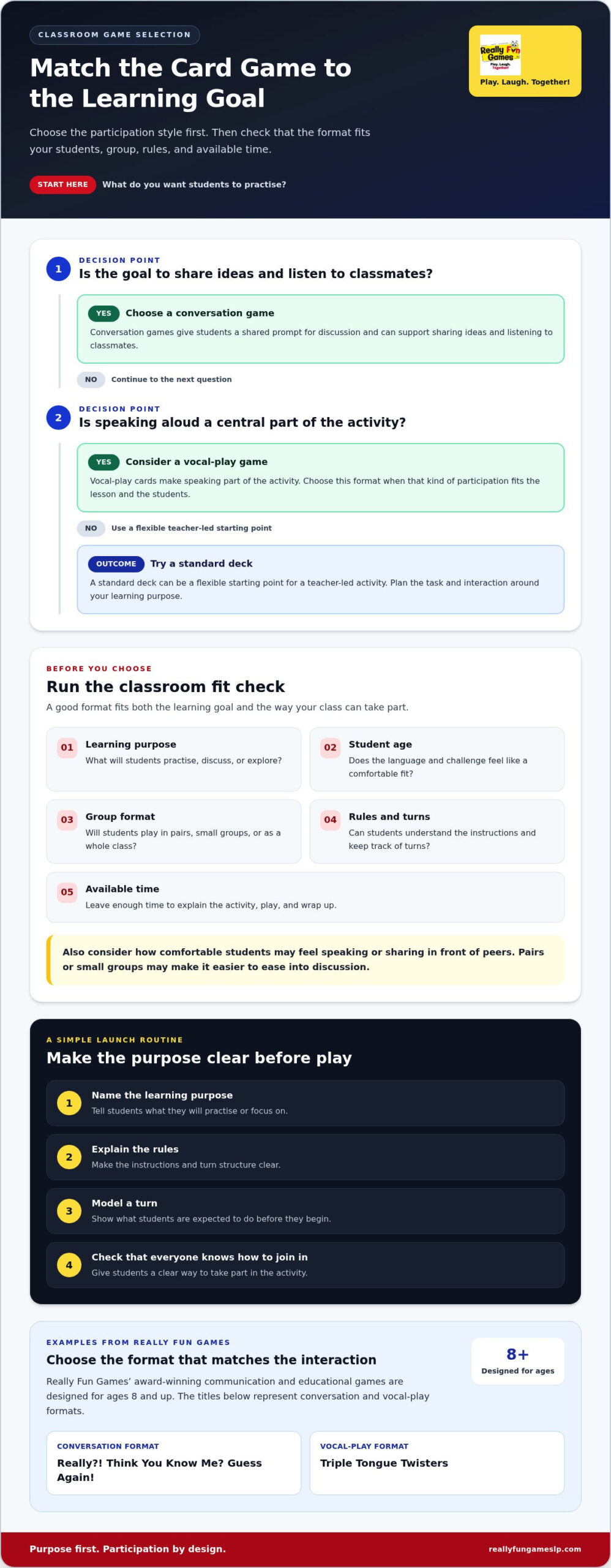
Start with what you want students to do, not just a game’s theme or how lively it looks. A quick selection check can help you find card games for teachers that fit the lesson and the class, without letting setup or unclear rules take over teaching time.
Choose a game format that gives students the kind of interaction your learning goal calls for. Before choosing, consider:
- Learning purpose: What will students practise, discuss, or explore?
- Student age: Is the language and level of challenge a comfortable fit?
- Group format: Will students play in pairs, small groups, or as a whole class?
- Rules: Can students understand the instructions and turn structure?
- Available time: Is there enough time to explain the activity, play, and wrap up?
Clear instructions matter. If students need a long explanation before they can take part, the activity may interrupt the lesson’s momentum. Consider what the game asks students to do: speak, listen, collaborate, or think independently. A game may involve several of these, but identifying the main type of participation makes it easier to choose and explain with purpose.
Match the game format to the activity’s purpose
Conversation games suit activities where students can share ideas and listen to classmates. Vocal-play games are another option when speaking aloud is part of the activity. Really Fun Games’ Really?! Think You Know Me? Guess Again! and Triple Tongue Twisters are examples of conversation and vocal-play formats. Choose the kind of participation that fits your lesson and students, rather than expecting one format to serve every goal.
Check age, group size, and classroom readiness
Really Fun Games products are designed for ages 8 and up. In your class, consider whether students can follow the instructions and keep track of turns. Think, too, about how comfortable they may feel speaking or sharing in front of peers. A pair or small-group format may make it easier to ease into a discussion, while a larger group may suit another activity. Let the classroom context guide your setup.
As you compare classroom options, use your learning goal and preferred interaction style to guide your choice. The communication and educational games collection offers formats to consider for student participation.
Card Game Formats for Teachers: Standard Decks, Conversation Games, and More
Different card formats invite different kinds of participation. A standard deck can be a flexible starting point for a teacher-led activity. Conversation cards put peer exchange at the center, while vocal-play cards make speaking part of the activity. The right choice depends on your purpose, group, and plan for facilitating play.
Use this comparison to consider what students will do and what you’ll need to lead:
| Format | Classroom use | Interaction style | Teacher considerations |
|---|---|---|---|
| Standard playing-card deck | Teacher-led activities using familiar classroom materials | Can involve individual thinking, turn-taking, or group participation, depending on the activity | You may need to explain or adapt rules to fit the goal, age, and class |
| Conversation card game | Activities focused on sharing ideas and listening to classmates | Peer-to-peer speaking and listening | Consider how comfortable students are sharing aloud and how you’ll invite different voices |
| Vocal-play card game | Language-focused activities that include speaking aloud | Individual or group vocal participation, depending on your setup | Choose an approach that feels welcoming for students with different comfort levels |
When can a standard playing-card deck work well?
A standard deck can work when you want to build a simple, teacher-led activity around materials already at hand. Its flexibility is useful, but it does not provide a classroom purpose by itself. Decide what students should do, explain the rules, and adapt the activity to your goal. A format that works for one age group or subject may not suit another.
When might a purpose-designed conversation game fit?
Choose a conversation format when student-to-student exchange is central to the activity. Really?! Think You Know Me? Guess Again! is one conversation-game example from Really Fun Games. Consider whether a structured exchange fits the group, and make room for students who prefer to listen before sharing.
For a welcoming group activity, think about the first interaction students will have. Will they introduce an idea, respond to a peer, or listen before taking a turn? A format that supports these small steps can help the class ease into participation. Teachers planning a group welcome can also consider classroom icebreaker games for groups as one way to get students interacting.
Before choosing among card games for teachers, picture one round from start to finish: what students do, how turns move, and what happens if someone isn’t ready to speak. This quick run-through can show whether the format supports the lesson or needs a simpler structure.
How Teachers Can Introduce Card Games and Keep Students Involved
A smooth start helps students focus on playing instead of guessing what to do. Explain why you’re playing, show how a turn works, and give students a chance to try. A predictable routine provides structure while leaving room for the lively moments that make shared play enjoyable.
Set up a clear, low-friction first round
Before explaining the rules, share the goal in student-friendly language. For example: “We’re practising listening to different ideas.” Then explain what students need to know to start, following the selected game’s instructions. Model one turn, pause for questions, and clarify how turns move and what respectful listening looks like.
- Set the purpose. Name the skill or type of participation students will focus on.
- Explain the rules. Share the essential instructions for starting, taking a turn, and continuing.
- Model a turn. Demonstrate the steps with the materials and instructions for the chosen game.
- Begin play. Start the first round, watch for confusion, and check understanding before moving on.
Keep the first explanation short. Add details when they become relevant, rather than asking students to remember every instruction before playing. A quick check, such as “What happens after someone finishes a turn?” can show whether the group is ready to continue.
Adapt participation without losing the fun
Not every student will be ready to speak in front of the whole class. Offer ways to join that suit the activity: listen first, think through a response with a partner, contribute in a small group, or take a turn when ready. Explain these options to everyone so a quieter way of joining feels like a normal part of participation.
As the round unfolds, notice whether students understand the turn structure and have a chance to contribute. If the pace becomes confusing, pause, restate the next step, and resume. A brief reset can get the group back on track without interrupting the activity for long.
For example, introduce a language-focused card activity by naming the goal, demonstrating one turn according to the game’s instructions, and inviting students to try with a partner before sharing with the group. Match the activity to whether students will listen, respond, or speak aloud. Some may speak first; others may listen and join on a later turn. Check in after the opening round and clarify the process if needed.
A clear routine gives the class a shared starting point, while flexible participation helps students enter the activity in different ways. Keep the focus on the purpose you set, and adjust the setup if students need a clearer path to join in.
Bring Classroom Card Games to Life with Really Fun Games
A well-chosen game can add a lively moment to a classroom routine and give students a shared way to connect. Really Fun Games creates award-winning communication and educational games designed for ages 8 and up. The games are easy to learn and replayable, giving teachers a practical way to bring play into the classroom.
Choose a game that supports the kind of interaction you want
Begin with the experience you want students to have. If your activity centers on sharing ideas and communicating with classmates, a conversation game puts peer interaction at the heart of play. Really?! Think You Know Me? Guess Again! is one example. Consider how your students feel about speaking and listening in a group, then choose a structure that fits the learning goal and feels inviting.
For a playful vocal activity, try Triple Tongue Twisters. It’s a good fit when you want spoken language to be part of the classroom experience. Keep students’ comfort in view: some groups may enjoy speaking together, while others may prefer a gentler introduction or a chance to listen before joining in. The right format supports participation without requiring every student to take part in exactly the same way.
Make classroom play part of a broader learning routine
A card game can sit alongside discussion, individual practice, creative tasks, or reflection. It doesn’t need to carry the whole lesson. Decide where it fits: as an introduction to a topic, a social element during practice, or a shared activity with a different rhythm. That way, play supports the learning routine rather than feeling like an unrelated break.
After the activity, take a moment to reflect. Did students understand how to participate? Who spoke, listened, or collaborated? Did the activity connect with the goal you set? These observations can help you decide whether to repeat the format, adjust the group setup, or choose another kind of game next time. Engagement may look different from student to student, so notice more than who spoke most.
When choosing card games for teachers, look for a format that fits both your classroom goal and the group in front of you. A clear purpose, a comfortable way to join, and a game students can return to can make play a meaningful part of learning. The Really Fun Games collection includes options to consider for your classroom.
Make Your Next Classroom Game Count
A memorable classroom activity doesn’t need to transform the whole lesson. It can start with one clear invitation: listen closely, share an idea, or make space for a classmate’s perspective. Choose card games for teachers with that moment in mind, then notice how students respond. Their participation can help you shape the next round, adjust the group format, or carry a lively conversation into the rest of the lesson.
As you plan your next activity, think about the classroom atmosphere you want to create. Playful interaction can make room for curiosity, laughter, and connection while giving students a meaningful way to take part. The best fit is the one that suits your learning goal and your group.
Frequently Asked Questions
Can teachers use card games to support classroom learning?
Yes. Card games can support classroom learning when the activity has a clear purpose. After a lesson, for example, students might use a game round to revisit an idea, then write one takeaway or question on a note. This connects play back to the lesson. Card games for teachers work best as one part of a broader routine, not as a shortcut to learning.
How do I choose a card game for my students?
Choose a game that matches the participation you want, then picture how it will work with your class. Try explaining the first turn aloud before introducing it. If the explanation feels confusing or lengthy, simplify the setup. Consider whether students will be comfortable with the pace, group arrangement, and expectations for speaking or responding.
Are conversation card games suitable for classroom icebreakers?
Yes. Conversation card games can help students begin interacting through a shared, structured activity. For an icebreaker, choose prompts that feel comfortable for the group, such as talking about a favorite book or a subject they enjoy. Make listening part of the activity, and let students discuss an answer with a partner first. A pass option can keep participation welcoming without putting anyone on the spot.
What age are Really Fun Games designed for?
Really Fun Games are designed for ages 8 and up. Use age as one guide, not the only measure of classroom fit. Introduce a sample turn and observe whether students can follow the instructions and participate comfortably. Familiarity with the format, preferred ways of communicating, and group setting can all affect how smoothly a game fits into a lesson.
Can card games help students practise communication skills?
Card games can create opportunities to speak, listen, take turns, and respond to peers, though a game alone doesn’t guarantee a particular result. Choose one behavior to notice during play, such as responding to a classmate’s idea or waiting for a turn. Afterward, invite students to name one helpful interaction they observed. This gives the class a concrete way to reflect on communication.
How can I make a classroom card game inclusive?
Offer more than one comfortable way to join. Students might listen during the first round, rehearse an answer with a partner, or contribute aloud when ready. Explain how they can ask for clarification or pass on a turn, if that suits the activity. Keep expectations kind and consistent, and notice whether the format gives students different ways to participate.
Explore the Really Fun Games collection and choose a game that fits your classroom.
