
A good game can make self-expression feel less like a performance and more like a shared discovery. Games for self-expression for adults can use conversation prompts, creative activities, movement, and playful challenges to help people share thoughts, notice feelings, and connect. This guide explores 15 activities, with options for different group settings and comfort levels.
It’s natural to think that opening up takes the right words or a certain level of confidence. But a simple prompt, quick sketch, or silly tongue twister can give everyone an easy way into the conversation, with no artistic talent or perfect answer required. The goal isn’t to put anyone on the spot; it’s to create room to participate in a way that feels comfortable.
Explore ideas for expressing emotions, telling stories, sharing perspectives, and practicing listening and communication together. Some suit a relaxed gathering, while others bring energy to a group activity. Try the ones that fit your group, adapt the prompts as needed, and let connection grow one playful turn at a time.
Key Takeaways
- Choose creative activities such as drawing, journaling, or movement to give people different ways to express what they think and feel.
- Use simple prompts and attentive listening to practice communication without making anyone feel pressured to share more than they want.
- Match each game to the group and setting, whether you’re planning a lively party activity or a quieter conversation for two.
- Small adjustments to the rules can help make a game more comfortable, inclusive, and engaging for everyone playing.
- Explore conversation and wordplay games for a ready-to-play way to spark laughter, sharing, and connection.
1. Creative activities for communication and connection
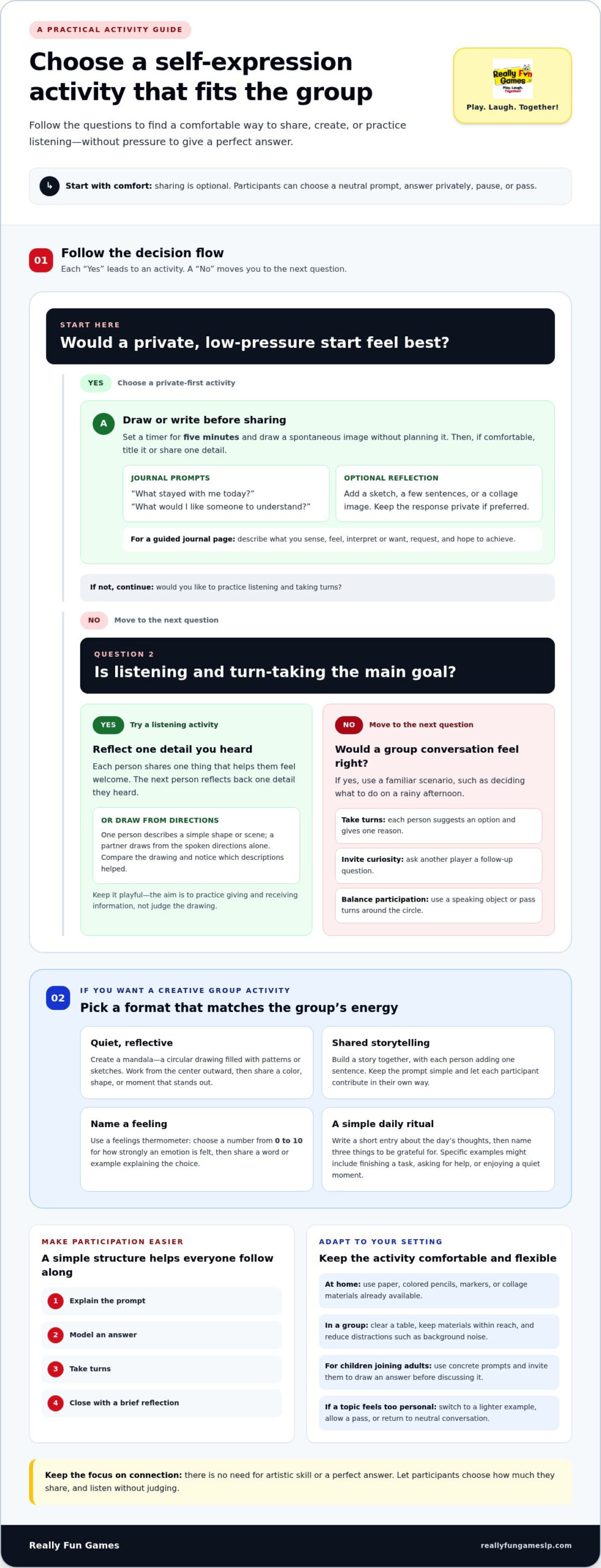
Creative activities give adults different ways to communicate. Speaking, writing, body language, music, and dance can all help people express thoughts and emotions. For a low-pressure start, set out paper, colored pencils, markers, or collage materials. Invite everyone to choose a medium, then share only what they feel comfortable discussing.
Prepare a calm space before beginning: clear a table, arrange materials within reach, and reduce distractions such as background noise. Offer a choice between drawing quietly and creating alongside others. A mandala is a two-dimensional circular drawing filled with patterns or sketches. Participants can create one from the center outward, then describe a color, shape, or moment that stands out, without explaining the whole picture.
For a brief creative exercise, set a timer for five minutes and draw a spontaneous image without planning it. Afterward, participants can title the image or share one detail. The focus is meaning, not artistic skill. This can give someone space to approach difficult thoughts at their own pace before talking, while clear permission to pause helps keep the activity manageable.
Daily self-esteem activities can fit into an existing routine. Each evening, write a short journal entry about the day’s thoughts, then name three things you’re grateful for. Keep the examples specific, such as finishing a task, asking for help, or enjoying a quiet moment. If children join an adult group, use concrete prompts and invite them to draw an answer before discussing it.
Choose games for self-expression by matching the activity to the group’s comfort level and preferred style. Start with private journaling or drawing, then offer optional partner sharing or group conversation. For trauma and resilience activities, don’t ask anyone to recount distressing experiences. Let participants choose a neutral prompt, pause, or pass. A facilitator can set boundaries by explaining that sharing is voluntary and personal stories stay within the agreed group rules.
Free self-expression activities include a journal prompt, a shared story where each person adds one sentence, or a five-minute spontaneous drawing using materials already at home. Game costs depend on the specific purchased game, while these activities need no dedicated game purchase. Most work through a simple turn-taking rule: choose a prompt, respond in your own way, and listen without judging. For a conversational activity after creative reflection, browse the conversation and wordplay games.
2. Social skills and communication
Social skills grow through small, repeatable moments: taking turns, listening without interrupting, and responding to another person’s idea. A simple group activity can make these actions visible. For example, ask each person to share one thing that helps them feel welcome, then invite the next player to reflect back one detail they heard. This gives the group a chance to practice speaking clearly and showing attention.
A feelings thermometer offers a concrete way to name emotions. Ask players to choose a number from 0 to 10 for how strongly they feel an emotion, then share a word or example that explains their choice. Someone might say, “I’m at 6 for excitement because I’m looking forward to the weekend.” No one needs to defend their number. The exercise builds emotional awareness and gives listeners a chance to respond with curiosity.
Communication games can also encourage perspective-taking. Give the group a familiar scenario, such as deciding what to do on a rainy afternoon. Each person suggests an option, explains one reason, and asks another player a follow-up question. This structure encourages clear expression while showing that people can interpret the same situation differently. To keep the conversation balanced, use a speaking object or pass turns around the circle.
For a creative listening activity, have one person describe a simple shape or scene while a partner draws from spoken directions alone. The speaker might say, “a small circle above a wide line,” then pause for questions. Compare the drawing with the original and notice which descriptions helped. Keep the mood playful: the point is to practice giving and receiving information, not to judge anyone’s drawing.
Writing can help players organize their thoughts before speaking. Offer a prompt such as “One thing I appreciate in a teammate is…” Give everyone a moment to write privately, then let them choose whether to read their answer aloud. This format suits a classroom, workplace team, or family gathering because people can participate at different levels. A favorite prompt can become a recurring opening ritual, helping the group notice what its members value.
Use a predictable structure to make activities easier to follow: explain the prompt, model an answer, take turns, and close with a brief reflection. For instance, ask, “What made listening easier today?” Games can support social practice, but they aren’t a replacement for therapy or individualized support. If a topic feels too personal, switch to a lighter example, allow a pass, and return to neutral conversation. These small choices help participants build awareness, confidence, and connection through shared play.
3. What are the best games for self-expression for adults?
The best games give adults different ways to show their personality, preferences, and communication style. Choose formats that don’t depend on personal disclosures or artistic skill. A movement choice, playful sound challenge, or set of objects can let participants express themselves through decisions and reactions. Let the group’s comfort, setting, and energy guide your choice.
Try these less familiar formats for a fresh take on self-expression:
- Preference line-up: Name two options, such as “quiet morning” or “busy evening.” Players stand closer to the choice that fits them, then share a reason if they wish. The activity makes differences visible without treating one preference as better.
- Sound-and-response circle: One player makes a simple sound, such as a hum or finger tap. The next person answers with a sound that reflects their reaction, then starts a new round. Players can use volume, rhythm, or silence to convey a mood.
- Object association: Place familiar items, such as a key, a cup, and a scarf, on a table. Each player chooses one to represent a quality they value, like curiosity or steadiness. They can explain the connection or let the object speak for itself.
- Everyday decision challenge: Give the group a harmless choice, such as planning a shared meal with limited kitchen tools. Each person names a priority, then the group combines ideas into one plan. This reveals how people weigh comfort, novelty, and cooperation.
These activities vary in how much attention they give to individual expression. Preference line-ups involve visible choices, while object association lets each person decide what meaning to share. A sound circle may suit a group that enjoys playful vocal expression. For a team activity, a decision challenge can highlight how members explain priorities and find common ground.
Before starting, explain what participation involves and offer an alternative. Someone who doesn’t want to move across the room can point to a choice instead. A player who prefers not to make sounds can tap a surface or pass. These options keep the rules accessible while preserving the activity’s purpose.
Consider the setting, too. A workplace group may enjoy a shared decision challenge, while friends might prefer object association. Try one format first, then ask which part felt most engaging. The strongest games for self-expression for adults make room for personal choices while giving the group something enjoyable to do together.
4. What are creative party games that help adults express themselves?
Party games can invite self-expression through quick choices, playful performances, and shared reactions. Pick activities guests can join without preparing beforehand. A good party format gives each person a clear turn, a lighthearted theme, and the freedom to keep their contribution brief. Keep the energy moving by alternating individual turns with group participation.
Try these party-ready formats for fresh ways to show personality:
- Invent a signature greeting: Each guest creates a greeting using a gesture, sound, or phrase. The group repeats it, then the creator explains its inspiration or simply enjoys the echo.
- Imaginary product pitch: Give a player an everyday object, such as a paper napkin, and invite them to sell it as a surprising invention. A napkin might become a portable cloud or a superhero cape. Guests can add playful questions from the audience.
- Party persona: Ask everyone to choose a fun role for the evening, such as “keeper of the best stories” or “chief snack explorer.” Guests can introduce their persona in a sentence and use it as a playful conversation starter.
- One-minute appreciation toast: Invite a willing guest to celebrate a small, everyday delight, such as a favorite breakfast or a perfect rainy afternoon. Keep the subject light, and let guests pass or offer a toast together.
Set the tone before the first turn. The host can demonstrate a deliberately silly product pitch, then explain that guests can keep their answers short. This makes the activity feel playful rather than competitive. Skip scoring unless the group enjoys it; applause or a shared laugh can keep the focus on participation.
For a mixed group, pair guests who haven’t met and invite them to invent a joint party persona. They might be “the midnight pancake experts” or “the explorers of lost socks.” Each pair can introduce their creation, giving them an easy way to collaborate without sharing private stories. Guests who prefer not to perform can help invent names or suggest details.
Plan the sequence around the room’s energy. Start with signature greetings as guests arrive, then bring out imaginary product pitches once conversation is flowing. Save appreciation toasts for a quieter moment near the end. These small adjustments help creative party games feel connected to the event, giving adults room to be funny, thoughtful, or wonderfully unexpected.
Offer a quieter creative option alongside performance: people can express themselves through speaking, writing, body language, and artistic activities such as creating music or dancing. A mandala is a 2D circular drawing that can contain patterns, sketches, or other drawings inside it. A study reported on the page says mandala drawing can reduce negative emotions in its creators.
Guests could try a spontaneous image-making round: the five-minute art therapy activity has clients create a spontaneous image for five minutes. The page states that research supported by the American Art Therapy Association indicates art therapy techniques can improve mental health, emotional regulation, and engagement. It also reports that a 2018 study found social media may be a useful self-expression tool for people with low self-esteem or social anxiety.
5. What are good self-expression games for couples or small groups?
Couples often enjoy games that reveal how well they understand each other without turning the evening into a serious interview. Try a prediction match: privately choose what you think your partner would pick from two playful options, such as a cabin getaway or a city weekend. Reveal your answers together, then compare the reasoning behind any surprising match or mismatch.
Make each round more personal by choosing categories about everyday preferences, not private history. Ask which shared chore they’d gladly automate, what meal they’d serve an unexpected guest, or how they’d spend a free afternoon. The fun comes from anticipating each other’s choices and discovering what you hadn’t guessed. Keep the categories light enough for both players to enjoy.
For a small group, try a hidden-priority challenge. Give each participant a private goal, such as making a plan restful, adventurous, or budget-conscious. The group then plans an imaginary day trip together, negotiating activities and compromises. Afterward, reveal the goals and discuss which suggestions hinted at each person’s priorities. It’s a playful way to express preferences while practicing collaboration.
Another option is a “convince me” mini-debate. Pick a harmless topic, such as whether breakfast belongs at dinner or which season makes the best vacation. Each person argues for the side they genuinely prefer, then names one point that changed or strengthened their view. This format gives opinions room to shine without requiring anyone to share intimate experiences.
For a couple’s game night, choose a ready-made conversation format when you want fresh topics without inventing them together. Conversation games can provide a playful structure for taking turns and learning new details about each other. Agree to keep answers brief or expand on them, depending on your mood.
Small groups can also try a “shared decision, private reason” round. Everyone votes on a low-stakes choice, such as the best kind of weekend outing, then shares one reason for their vote. Comparing reasons often reveals different priorities, even when people choose the same option. These formats suit couples and small groups because they invite personal expression through choices, predictions, and friendly discussion.
Therapy game rules can be adapted to the needs and preferences of a group or individual client. The same flexible approach can help you choose a self-expression activity: make a prompt easier, more imaginative, or less personal to suit the people playing. A couple might answer aloud, write a choice first, or pass on a prompt. A small group can agree to keep discussion focused on the game rather than press anyone to explain more than they wish. These are options, not requirements, and participants can choose what feels comfortable.
Before starting, decide together whether the goal is playful discovery, practicing clear preferences, or simply enjoying conversation. Then adjust the wording: replace a direct personal question with a fictional scenario, allow a short answer instead of a story, or invite players to explain only what they want to share. If the energy changes, switch to a lighter prompt or end the round. Keeping the activity flexible lets people participate in different ways while preserving its relaxed, voluntary spirit.
Really Fun Games: Really?! Think You Know Me? Guess Again
Really?! Think You Know Me? Guess Again gives adults a playful way to share perspectives and discover what friends or family members think about one another. It suits a couples’ evening, a small-group gathering, or family game night when you want lively conversation without a formal feel.
For a burst of vocal play, Triple Tongue Twisters, Tricky Tetra Tongue Twisters, and Blooming Tongue Twisters offer a different kind of shared activity. These games can bring laughter into the room while players try expressive wordplay together. The games are designed for ages 8+, so adults can also enjoy them alongside younger family members.
Choose a conversation game for thoughtful sharing, or tongue twisters when your group wants energetic fun. Explore the Really Fun Games collection at Really Fun Games and find a playful fit for your next gathering.
Make Your Next Gathering a Moment to Connect
Choose one activity that suits the mood, then give everyone an easy way to join in. A quiet pair might trade imaginative prompts, while a lively group could build a story together or try a playful word challenge. Keep sharing optional, and let the conversation follow what feels engaging. Small choices like these help games for self-expression for adults feel welcoming, personal, and fun rather than like a test.
For your next gathering, decide what you want to invite: a fresh conversation, a burst of laughter, or a chance to learn something unexpected about one another. Then choose a game that makes that connection easy to begin. The best moments often start with a simple prompt and grow through genuine listening.
Explore Really Fun Games and find a playful way to bring people together. Start your next game night with curiosity, a little spontaneity, and room for everyone to join.
Frequently Asked Questions
What are popular self-expression board games for adults?
Conversation card games and wordplay games are popular choices for adults who want to share ideas through play. Really?! Think You Know Me? Guess Again is a conversation card game, while Triple Tongue Twisters and Tricky Tetra Tongue Twisters offer a more vocal, playful format. These are card games, not board games. Choose conversation prompts for reflective discussion, or tongue twisters when your group prefers expressive wordplay and laughter.