
The secret to raising a confident, articulate speaker isn’t found in a dry textbook or a repetitive drill. It’s actually hidden in the middle of a fit of giggles over a “slippery snail” or a “purple paper person.” We’ve all seen how traditional speech practice can quickly become a chore for both parents and children. It’s tough to compete with the flash of a tablet, and finding age-appropriate challenges that actually keep them engaged is often easier said than done.
You likely already know that laughter is a powerful bond, yet it’s also a serious tool for development. In this guide, we’ll show you how a massive collection of tongue twisters for kids can turn routine practice into a hilarious family game night adventure. Recent research confirms that consistent vocal play can lead to measurable improvements in fluency, with over 90% of students reporting higher speaking confidence after just four weeks of practice. We’ll explore the science behind these “mouth gymnastics,” share tips for screen-free fun, and preview how award-winning tools like Triple Tongue Twisters make every slip of the tongue a reason to celebrate.
Key Takeaways
- Understand how vocal play strengthens the muscles of the mouth and acts as a secret booster for early literacy and brain development.
- Discover a massive collection of over 50 tongue twisters for kids that scale from simple warm-ups to expert-level challenges.
- Learn how to host a screen-free family game night using a “Referee” to ensure clear communication and hilarious fair play.
- Find out how award-winning tools like Triple Tongue Twisters use strategic dial mechanics to make speech practice feel like an exciting adventure.
Beyond the Giggles: Why Tongue Twisters for Kids Are Secret Brain Boosters
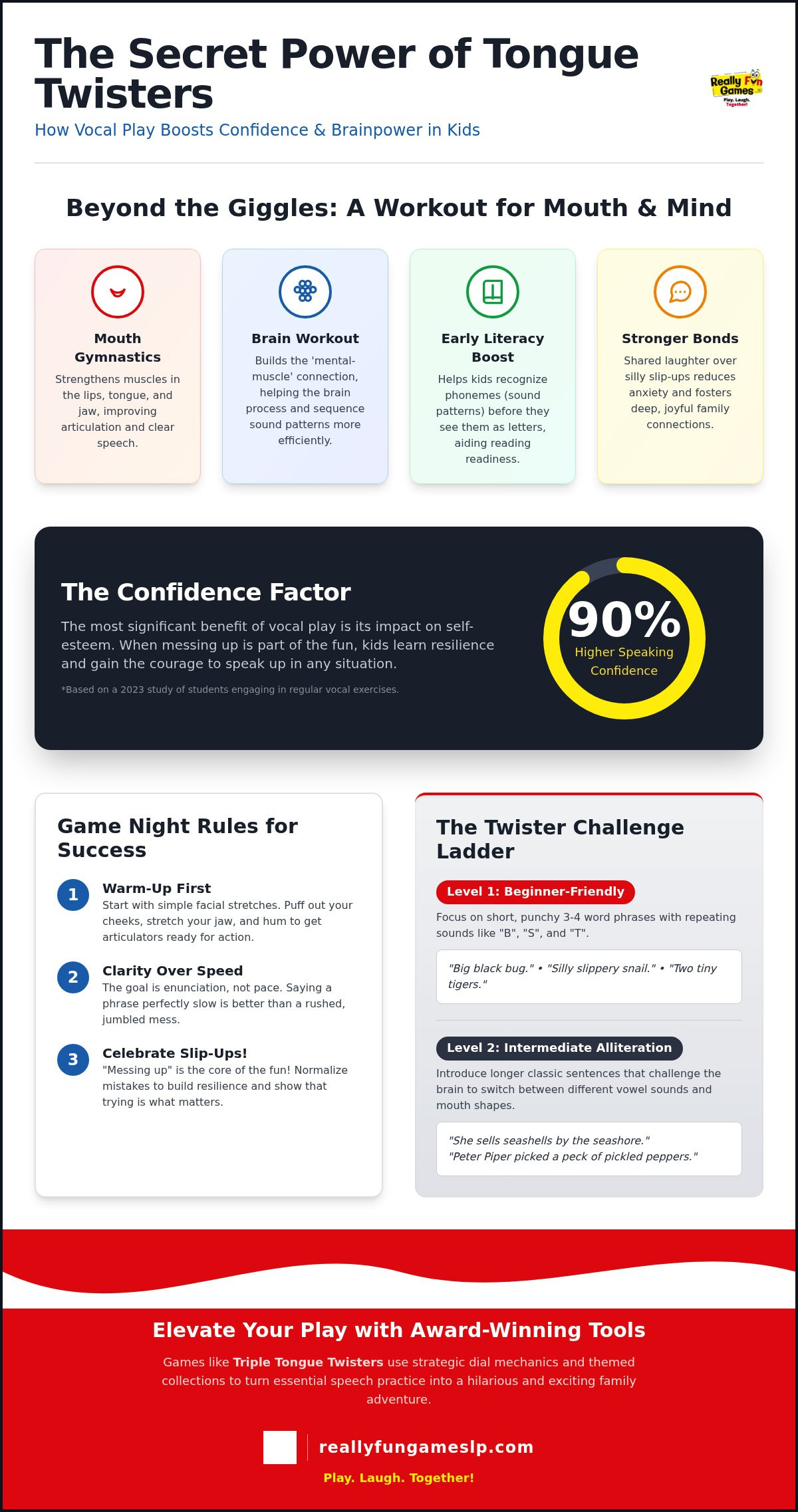
A Tongue twister is much more than a silly sentence that trips you up. These phrases are specifically designed to challenge the muscles of the mouth, requiring the lips, tongue, and jaw to move with precision and speed. Think of it as a high-energy workout for the face. By choosing the right tongue twisters for kids, you aren’t just sparking laughter; you’re facilitating a sophisticated form of “vocal play” that lays the groundwork for early literacy.
When children engage in vocal play, they’re experimenting with the rhythm, pitch, and structure of language. This experimentation is vital for reading readiness. It helps them recognize patterns in sounds before they ever see them written as letters. Beyond the cognitive benefits, the shared experience of stumbling over words builds deep emotional bonds. Laughter acts as a natural social lubricant, reducing anxiety and fostering a sense of empathy within the group. This is exactly why we champion games for better family communication as a way to turn skill-building into a joyful connection.
The Science of Articulation and Pronunciation
Speech is a physical feat. To produce clear sounds, the brain must sequence complex motor movements in milliseconds. Repetitive sounds in tongue twisters strengthen specific phonemes, which are the individual building blocks of speech. This repetitive practice builds a “mental-muscle” connection, allowing the brain to process and sequence sound patterns more efficiently. Articulation is the physical act of clear speech. By focusing on these tiny movements, kids improve their overall fluency and clarity without feeling like they’re “studying.”
Building Confidence Through Perfectly Imperfect Speech
The most beautiful part of this activity is that “messing up” is the core of the fun. In a world that often demands perfection, tongue twisters celebrate the “perfectly imperfect.” When kids see adults trip over their words, it normalizes mistakes and builds incredible resilience. They learn that a slip-up isn’t a sign of failure; it’s a reason to laugh and try again. This supportive environment is what moves the needle from “speech drills” to exciting tongue twister challenges for kids. This shift in mindset builds a foundation of confidence that carries over into public speaking. In fact, a 2023 study showed that over 90% of students reported higher speaking confidence after just four weeks of engaging in these types of vocal exercises.
The Great Tongue Twister Roundup: From Easy Starters to Expert Challenges
Jumping straight into the hardest phrases is a recipe for a tied-up tongue. Before you dive into our collection, start with a quick “Warm-Up” phase. Stretch your jaw, puff out your cheeks, and hum a low note to get the blood flowing to your articulators. In these early stages, remember the golden rule: enunciation wins over speed every single time. It’s much better to say a phrase perfectly at a snail’s pace than to rush and create a word salad. This focus on clarity is what makes tongue twisters for kids such an effective tool for building long-term speaking confidence.
Beginner-Friendly Phrases for Early Learners
Focus on these punchy, 3-4 word phrases that highlight the “B,” “S,” and “T” sounds. These are the building blocks of vocal coordination. Encourage your little ones to say each phrase three times slowly before trying to speed up.
- Big black bug.
- Silly slippery snail.
- Two tiny tigers.
- Blue bluebird.
- Seven silver swans.
- Ten tall trees.
- Red leather, yellow leather.
- Fat frogs flying.
- Fresh fried fish.
- Busy buzzing bees.
Intermediate Alliteration for Growing Vocabularies
As their confidence grows, introduce longer sentences that play with varying vowel sounds. These classics have stood the test of time for a reason. They challenge the brain to switch between different mouth shapes rapidly. If you’re looking for a way to keep these handy during dinner, check out these funny tongue twister cards to keep the energy high.
- Peter Piper picked a peck of pickled peppers.
- How much wood would a woodchuck chuck if a woodchuck could chuck wood?
- I scream, you scream, we all scream for ice cream!
- She sells seashells by the seashore.
- Betty Botter bought some butter, but she said the butter’s bitter.
- Swan swam over the sea, swim swan swim!
- A happy hippo hopped and hiccupped.
- Six slippery snails slid slowly seaward.
- Double bubble gum bubbles double.
- Greek grapes, great grapes.
The Final Boss Twisters for Advanced Articulation
Are you ready for the ultimate challenge? These are designed to trip up even the most articulate adults. We use the “Triple” rule here: you must say the phrase three times fast without a single trip-up to claim victory. Challenge the adults to join in. It levels the playing field when the kids see the “experts” stumbling too!
- The sixth sick sheik’s sixth sheep’s sick.
- Pad kid poured curd pulled cod.
- Rory the warrior and Roger the worrier were reared wrongly in a rural brewery.
- Which witch switched the Swiss wristwatches?
- Toy boat, toy boat, toy boat.
- Specific Pacific.
- A box of mixed biscuits, a mixed biscuit box.
- The 33 thieves thought that they thrilled the throne throughout Thursday.
- Truly rural.
- Flash message, flash message.
Don’t be afraid to explore our games to find even more ways to turn these tricky phrases into a structured family competition.
Themed Tongue Twister Collections: Seasonal and Silly Wordplay
Variety is the spice of vocal play. While the classics are wonderful, keeping the momentum going requires a fresh rotation of challenges that spark a child’s imagination. By grouping tongue twisters for kids into specific themes, you’re doing more than just preventing boredom. You’re actually building “contextual vocabulary,” helping kids learn and use new words within a familiar and exciting framework. It’s a natural way to expand their world while they’re busy trying not to trip over their own teeth.
Don’t stop at the lists we provide. We love seeing families create their own custom challenges based on their unique lives. Does your dog, Daisy, dig deep? Or maybe your hobby is hiking high hills? These personal touches make the game feel special. For those looking to bring this energy into their holiday gatherings, exploring specialized family card games can turn a standard dinner into an unforgettable event. These themed sets ensure the laughter never stops, no matter the season.
Spooky and Festive Seasonal Twisters
The holidays are a perfect time to break out themed wordplay. During October, try “Seven spooky skeletons sat silently” or “Pick a plump purple pumpkin.” These phrases help kids engage with the festive atmosphere in a lighthearted way. When winter rolls around, switch to “Santa’s super sled slipped swiftly” or “Rudolph’s red nose really radiated.” Specialized collections like Santa’s Tongue Twisters or Trick-or-Treat Tongue Twisters take the guesswork out of planning, providing curated, high-energy phrases that help kids engage and build confidence during holiday parties. For even more ways to keep the whole family entertained at your next celebration, check out our guide to holiday party games for kids that bridge the gap between age groups and spark real conversation.
Animal-Themed Alliteration for Nature Lovers
Animals provide an endless source of inspiration for vocal gymnastics. Alliteration is the repetition of initial consonant sounds. It’s the secret sauce that makes these phrases so tricky and delightful. You can even add a sensory layer by encouraging kids to make the animal’s sound after completing the phrase. It adds a physical, high-energy element to the practice. Try these vibrant animal challenges:
- Giggling goats gather green grass.
- Prickly porcupines poke pink pillows.
- Happy hippos hop high.
- Clever cats catch colorful crickets.
- Zany zebras zigzagged zealously.
These themed collections ensure that the spirit of play stays alive all year long. Whether you’re celebrating a holiday or just enjoying a rainy Tuesday afternoon, themed wordplay keeps the connection strong and the learning constant.
How to Turn Tongue Twisters into a Hilarious Family Game Night
Static lists of sentences are fine for a quick laugh, but they don’t always hold a child’s attention for long. To truly engage your little ones, you need to turn these phrases into a dedicated event. Creating a “Game Night” atmosphere signals to kids that this activity is special. It shifts the focus from “practicing speech” to “winning the challenge.” This structured approach is the secret to deep family bonding and communication.
To keep the energy high and the rules fair, appoint a “Referee.” This role is crucial because it ensures everyone is prioritizing clarity over just being loud. The Referee listens for every crisp consonant and decides if a player successfully completed the challenge. It’s a great way to teach active listening and fair play while everyone is busy giggling.
Ready to host your first “Twister Tournament”? Follow this simple five-step framework:
- Step 1: The Selection. Choose five tongue twisters for kids with different difficulty levels.
- Step 2: The Face-Off. Pair up family members for head-to-head battles.
- Step 3: The Triple Rule. Each player must say their phrase three times fast without a single trip-up.
- Step 4: The Speed Round. The Referee uses a timer to see who can finish the “Final Boss” phrase the fastest.
- Step 5: The Silly Prize. Award a title like “The Sultan of Speech” or “The Articulation Ace” to the winner.
3 Creative Games to Play with Simple Phrases
If a tournament feels too formal, try these high-energy variations. The “Speed Relay” involves passing a single twister around a circle, with each person trying to say it faster than the last. In “Emotional Twister,” players must recite the phrase while acting out a specific emotion, such as being extremely sleepy or incredibly surprised. Finally, the “Whisper Challenge” asks one person to mouth the twister silently while the rest of the family tries to guess what they’re saying based on their lip movements.
Using Tongue Twisters as Icebreakers for Groups
These activities aren’t just for the living room. They serve as fantastic educational games for speech therapists and teachers. In a new group setting, a quick round of vocal play breaks the ice instantly. It levels the playing field because everyone, including the adults, is bound to make a mistake. For SLPs, this “fun-first” approach makes articulation exercises feel less like a clinical drill and more like a shared adventure. If you’re looking for more structured icebreaker games for groups that turn strangers into a synchronized, laughing team, explore our full collection of communication games today.
Elevate Your Play with Really Fun Games’ Tongue Twister Collections
Play is the ultimate bridge to connection. While a simple list of tongue twisters for kids is a great starting point, the right tools can transform a few minutes of practice into a full-blown family obsession. We designed our collections to be more than just cards; they are high-energy social catalysts that bring people together through the shared joy of “perfectly imperfect” speech. It’s about creating an environment where laughter is the priority and confidence is the natural result.
The heart of the “Triple Tongue Twisters” experience is our innovative dial mechanic. Instead of just reading a card, players use number dials to add layers of strategy and replayability. This unique feature challenges you to adapt on the fly, making every round feel fresh and exciting. It’s not just about what you say. It’s about how you navigate the game’s twists and turns. This mechanic ensures that no two game nights are ever the same, keeping even the most competitive players on their toes.
We know that family game night can get a little rowdy. That’s why our cards feature a high-quality, durable design that can withstand years of enthusiastic play. These games are specifically crafted for ages 8 and up, ensuring they are sophisticated enough for adults to enjoy while remaining accessible for growing speakers. It’s the professional-grade evolution of a simple list, designed to last through countless fits of giggles.
Triple Tongue Twisters: The Award-Winning Articulation Game
This isn’t just a game; it’s a 2022 Creative Child Award winner. It challenges players to master difficult phrases in a group setting, turning the solitary act of speech practice into a collaborative adventure. Whether you’re a parent looking for a screen-free activity or an SLP seeking a “fun-first” tool, this game delivers results. I invite you to discover the collection and see how award-winning design can transform your next family gathering.
Specialized Collections for Every Occasion
The fun doesn’t stop with the core game. We’ve created a whole family of themed sets to keep the vocabulary fresh and the challenges relevant throughout the year. These specialized collections include:
- Tricky Tetra Tongue Twisters for an added layer of linguistic challenge.
- Blooming Tongue Twisters to celebrate the arrival of spring.
- Santa’s Tongue Twisters for festive holiday cheer.
- Trick-or-Treat Tongue Twisters for spooky October fun.
These themed sets make incredible gifts for teachers and speech-language pathologists who want to bring a spark of joy into their classrooms or clinics. If you’re looking for the ultimate experience, the Really Fun Custom Games Bundle allows you to find the specific combination that fits your family’s needs perfectly. From holiday party games for kids to professional therapy sessions, there’s a collection designed to bring people together through the power of play.
Ready to Ignite Your Family’s Next Great Adventure?
Embracing the “perfectly imperfect” is the fastest way to turn speech practice into the undisputed highlight of your week. We’ve explored how vocal play acts as a secret brain booster, strengthening the muscles of the mouth while fostering deep emotional bonds. By moving beyond static lists and hosting your own “Twister Tournaments,” you create an environment where mistakes are celebrated with laughter rather than frustration.
Using tongue twisters for kids isn’t just about mastering clear articulation; it’s about building a foundation of social confidence that will serve them for a lifetime. Our award-winning physical card games are specifically designed for ages 8+ and are trusted by educators and SLPs nationwide to spark meaningful connection. With highly replayable mechanics like our unique number dials, these durable sets are ready for years of screen-free family fun.
It’s time to trade screen time for shared memories. Discover the Award-Winning Triple Tongue Twisters Collection and choose the perfect set to fit your family’s needs today. Let the giggles begin and watch your children’s confidence soar!
Frequently Asked Questions
What is the hardest tongue twister for kids to say?
“The sixth sick sheik’s sixth sheep’s sick” is widely cited as the toughest phrase in the English language. It forces the mouth to switch rapidly between “s” and “sh” sounds, which is a massive challenge for the tongue’s motor control. For a lighter but still tricky option, try repeating “Toy boat” five times fast. These phrases are brilliant for testing the articulation skills kids have built during their practice sessions.
At what age can kids start practicing tongue twisters?
Kids can start with very simple vocal play around age 3 or 4, focusing on short, silly sounds. However, more structured games are typically designed for ages 8 and up. At this stage, children have the cognitive focus and muscle coordination to handle complex alliteration and strategic play. Starting early with basic phrases helps build a love for language, while older kids enjoy the competitive edge of a dedicated game night.
How do tongue twisters help with speech therapy and articulation?
These phrases serve as a high-energy workout for the articulators, which include the tongue, lips, and jaw. By repeating difficult sound patterns, children strengthen the neural pathways responsible for speech coordination. This is why many speech-language pathologists use tongue twisters for kids to improve consonant clarity and overall fluency. It turns the physical act of clear speech into a fun, sensory experience that feels like play rather than a clinical exercise.
Can tongue twisters help a child who stutters or has social anxiety?
These games are fantastic for building confidence because they make mistakes a central part of the fun. When everyone in the family trips over their words, it reduces the stigma of making mistakes, which is very helpful for children with social anxiety. For those who stutter, the rhythmic nature of alliteration can help with breath control and pacing. The supportive atmosphere ensures that every player feels encouraged to speak up and join the laughter.
What are some short tongue twisters for beginners?
For those just starting out, it’s best to stick to short, three-word phrases that emphasize a single consonant. Try “Big black bug,” “Six sticky sticks,” or “Red leather, yellow leather.” These simple phrases allow beginners to focus on clear enunciation without getting lost in a long sentence. Once they can say these three times fast with perfect clarity, they’ll have the confidence to tackle the intermediate challenges found in our award-winning card collections.
How can I make tongue twisters more engaging for a group of kids?
The best way to engage a group is to transform the phrases into an interactive event. You can host a tournament where kids face off in head-to-head battles or play a speed relay by passing a phrase around a circle. Using physical tools like number dials adds a strategic element that keeps their attention. This shift from a static list to a dynamic game ensures that every child stays active and excited to participate.
Are there specific tongue twisters for different letter sounds?
Yes, tongue twisters are often categorized by the specific target sounds they use. If a child needs help with “S” sounds, “Silly slippery snails” is a great choice. For help with “L” sounds, you might try “Lucky little lizards.” This targeted alliteration allows you to customize the play to fit a child’s specific articulation goals. It’s a practical way to turn speech development into a tailored adventure that addresses individual needs through joyful laughter.
How often should we practice tongue twisters to see improvement?
Regular practice is the secret to seeing lasting results. A study from 2023 found that students showed significant improvement in speech clarity after practicing for just four weeks. Aiming for 10 to 15 minutes of play during your weekly family game night is a great start. Consistency helps keep the speech muscles toned and the brain’s sound sequencing sharp. Using tongue twisters for kids as a frequent, low-pressure activity makes the improvement feel natural and easy.