

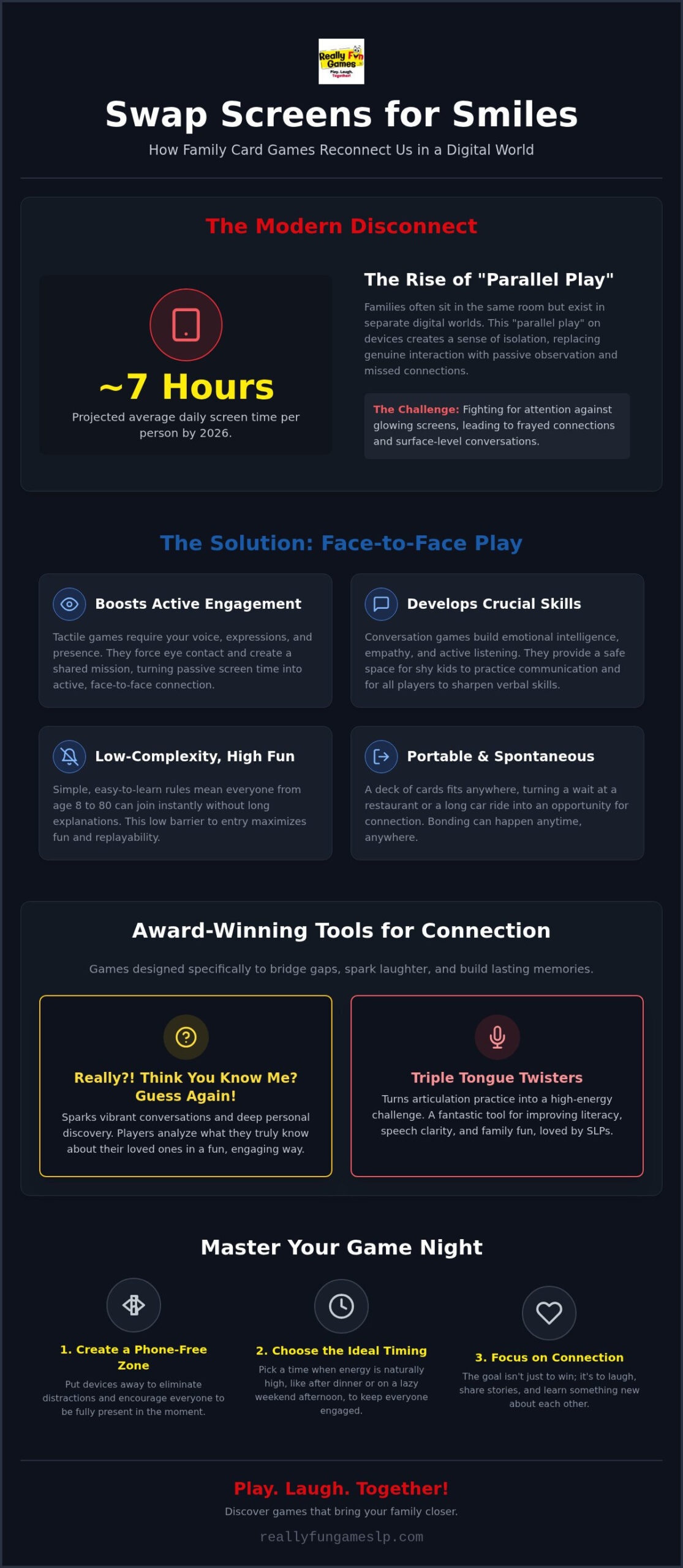
With the average person spending nearly seven hours a day on screens in 2026, it’s no wonder our real-world connections often feel a bit frayed. It is exhausting to fight for attention against a smartphone, especially when all you want is a genuine laugh or a meaningful conversation with your favorite people. You know that deep down, your family craves that closeness too; they just need a spark to get the energy flowing. This is why family bonding card games are becoming the ultimate tool for parents and educators who want to trade screen time for soul-stirring interaction.
By shifting the focus from glowing displays to face-to-face play, you can transform surface-level small talk into deep empathy and shared joy. We’ll explore how the right deck of cards can dissolve social anxiety, sharpen listening skills, and create a portable sanctuary of fun for your next road trip or rainy afternoon. Get ready to discover how simple, award-winning games can help you build a stronger, happier home through the transformative power of play. We are going to look at everything from quick icebreakers to deep conversation starters that keep everyone engaged and smiling.
Key Takeaways
- Turn digital fatigue into active engagement by choosing tactile games that prioritize face-to-face interaction over passive screen time.
- Learn how conversation-based mechanics build emotional intelligence and sharpen verbal skills through the power of shared laughter.
- Discover how to categorize family bonding card games by their primary goal, whether you’re chasing side-splitting humor or deeper personal discovery.
- Master the art of the perfect game night by establishing phone-free zones and choosing the ideal timing to keep the energy high.
- Explore award-winning tools like “Really?! Think You Know Me? Guess Again!” to spark vibrant conversations that create lasting memories for everyone.
Why Family Bonding Card Games are the Ultimate Screen-Free Solution
Screens have a way of stealing the room even when everyone is sitting together. By 2026, the global average daily screen time has reached over six hours and forty-five minutes, which makes the need for tactile play more urgent than ever. Family bonding card games aren’t just a way to pass the time; they are active engagement tools designed to pull us out of the digital fog. Unlike movies or video games where you are a passive observer, these games require your voice, your expressions, and your presence. They lower the barrier to meaningful conversation by giving everyone a shared mission that feels lighthearted and safe.
Spontaneity is the secret ingredient for long-term connection. You can pack a deck into a purse or glove box, turning a boring wait at a restaurant or a long car ride into a vibrant session of discovery. This portability means bonding doesn’t have to be a scheduled, high-pressure event. It can happen anywhere. By keeping the mechanics focused on interaction, these games act as a bridge. They help families cross over from surface-level “how was your day” chats to genuinely interesting discussions that reveal new things about each other.
Breaking the Digital Barrier
Interactive play is the ultimate antidote to “parallel play,” where family members sit side-by-side but remain worlds apart on their own devices. Physical cards force eye contact. You see the twinkle in a grandparent’s eye or the shy grin of a teenager when they’re about to make a move. While traditional card games often focus on complex strategy, modern bonding games prioritize the people at the table. This visual connection triggers laughter, which is nature’s best tool for lowering social anxiety. When you’re laughing together over a ridiculous tongue twister, the walls of awkwardness simply melt away and trust begins to grow.
The Benefits of Low-Complexity Rules
Frustration is the enemy of fun. If a game takes forty minutes to explain, the energy in the room dies before the first turn even starts. The best family bonding card games feature easy-to-learn rules that allow everyone from age 8 to 80 to jump in immediately. Really Fun Games designs every deck with this immediate engagement in mind. Take “Really?! Think You Know Me? Guess Again!” as a prime example. It is built to spark curiosity without a thick manual of rules. High replayability ensures these games become a staple of your family traditions rather than a one-time novelty. When the barrier to entry is low, the potential for connection is limitless. Check out our full collection of award-winning card games to find your next favorite.
The Science of Connection: How Conversation Games Build Empathy
Connection is more than just sitting in the same room. It’s about the active, joyful exchange of ideas and emotions. Conversation-based family bonding card games act as a catalyst for this exchange by using “get to know you” mechanics that stimulate critical thinking. Players aren’t just answering a prompt; they’re analyzing what they truly know about their loved ones. Research on Intergenerational Board Games and Pro-Social Behaviors shows that these shared activities foster positive emotions and cooperation across age gaps. This isn’t just about entertainment. It’s about exercising the brain’s empathy muscles in a way that feels like pure play.
Building Social and Communication Skills
Every round of a game is a practical lesson in social harmony. Turn-taking and active listening happen naturally because the game structure demands them. For shy or anxious children, a prompt on a card provides a psychological safety net that removes the pressure to “perform” or initiate a topic from scratch. Speech-language pathologists (SLPs) often use these tools because they turn articulation practice into a high-energy challenge. When kids engage in vocal play with products like “Triple Tongue Twisters,” they improve their literacy and speech clarity without feeling like they’re in a classroom. It’s a win-win for development and family fun.
Fostering Empathy Across Generations
There is something magical about a child realizing their parent or grandparent was once a kid with similar fears or dreams. Structured questions bridge the generation gap by uncovering “new” facts that might never surface in daily dinner table talk. When a child sees a parent guessing their response correctly, they feel deeply seen and validated. This role reversal often makes the child the “expert” on their own life, which boosts their confidence and sense of belonging. Empathy is practiced in its purest form when players must step outside their own perspective to guess how someone else would think or feel about a specific situation.
These moments of shared storytelling are the building blocks of long-term family memories, proving that family bonding card games are much more than just a hobby. You aren’t just playing a game; you’re writing a new, vibrant chapter of your family’s history. If you’re ready to see these benefits in action at your next gathering, you can explore the Really Fun Games collection to find the perfect match for your group’s personality.
Choosing Your Adventure: Comparing Types of Bonding Games
Every family has its own unique rhythm. Some nights call for a quiet, reflective atmosphere, while others demand a high-energy explosion of laughter. The secret to a successful game night is matching the deck to your group’s current mood. By categorizing family bonding card games by their primary goal, whether that is side-splitting laughter, personal discovery, or sneaky skill-building, you can ensure everyone stays engaged from the first deal to the last round. Choosing the right “adventure” means looking at the energy level of the room and deciding if you want to compete or collaborate.
Collaborative conversation games are perfect when you want to build bridges. They remove the “me versus you” tension and replace it with a shared mission of understanding. On the other hand, competitive games can add a spicy layer of excitement to a holiday party or a rainy afternoon. For road trips, look for compact, portable options that don’t require a table or a lot of pieces. The goal is to choose an activity that fits your setting, whether you’re crowded around the dining table or buckled into a minivan for a long journey.
Conversation and ‘Get to Know You’ Games
Discovery-based play is a powerful way to uncover shared history that often gets lost in the shuffle of daily life. These games are a gold mine for family reunions because they naturally bridge the gap between an eight-year-old and their great-grandmother. There is a specific kind of magic that happens when a child shouts, “Really?! You actually did that?!” after hearing a surprising story about their parent’s childhood. These moments of shock and delight validate everyone’s experiences and turn a simple card game into a legacy-building session that lasts long after the cards are tucked away.
Vocal Play and Tongue Twister Challenges
When the energy in the room starts to dip, it’s time to bring out the vocal challenges. Fast-paced games like “Triple Tongue Twisters” or “Santa’s Tongue Twisters” create a silly, low-stakes environment where everyone is bound to stumble over their words. This isn’t just for laughs; it’s a brilliant way to build confidence and public speaking skills. Kids learn that making mistakes is part of the fun, which lowers their anxiety about speaking up in other settings. You can learn more about How Tongue Twister Games Improve Speech and boost family confidence through the power of play. For those looking to expand their collection, the Really Fun Games collection offers a variety of high-energy options for every personality and event.
Mastering Game Night: Tips for Meaningful Family Interaction
Successful game nights don’t happen by accident; they’re crafted with a little bit of intention and a lot of heart. To truly unlock the potential of family bonding card games, you must first clear the digital clutter. Establish a “no-phone zone” where every device is tucked away in a basket or another room. This simple act signals to everyone that their presence is the most valuable thing in the room. Aim for a window of time when the day’s stress has faded, perhaps after dinner or on a lazy Sunday afternoon, to ensure everyone arrives with an open mind and a ready smile.
Creating a Nurturing Environment
Comfort is the foundation of connection. Soft lighting, cozy seating, and a spread of favorite snacks can turn a standard table setting into a sanctuary of play. When introducing a new game, keep the energy high by acting as a “warm guide” rather than a strict referee. Lead by example by offering vulnerable or hilarious answers first. This transparency lowers the stakes for shy players and sets a tone of authenticity. By focusing on the joy of the interaction rather than the rigid enforcement of rules, you create a space where even the most reserved family members feel safe to share their thoughts.
Adapting for Group Size and Age
Flexibility is your best friend when managing different personalities and group dynamics. If you’re hosting a massive family reunion, you can easily scale the experience by using Extra Number Dials to include more players in the fun. For smaller, more intimate groups, slow the pace down to allow for deeper storytelling after each card is played. The goal is to ensure every person feels included, regardless of their verbal skill level or competitive drive. Balancing the “win-at-all-costs” player with the one who just wants to chat requires a gentle hand and a focus on the shared experience.
The best part of a great game night is the “post-game glow” that lingers long after the cards are packed away. You’ll find that the inside jokes and surprising revelations from the evening naturally weave themselves into your conversations throughout the following week. This lasting impact is what makes play such a transformative tool for communication. If you’re ready to start your own tradition of laughter and discovery, explore our award-winning collection and find the perfect game to bring your family closer together.
Discover Really Fun Games: Award-Winning Tools for Connection
Connection shouldn’t feel like a chore or a formal lesson. At Really Fun Games, the philosophy is simple: we create joyful, inclusive tools that act as a “fun-loving facilitator” for your family. Every deck is designed to prioritize human connection over technical rules, ensuring that laughter remains the heart of the experience. These award-winning family bonding card games are built for anyone aged 8 and up, making them the perfect addition to a classroom, a therapy session, or your own living room. We believe that the best way to bring people together is through the transformative power of simple, high-energy social interactions that anyone can enjoy.
Why Families Love ‘Really?! Think You Know Me?’
As our flagship for bonding, “Really?! Think You Know Me? Guess Again!” is more than just a trivia game about your loved ones. The magic lies in the unique “Guess Again!” mechanic. This feature keeps every player engaged because even if you miss the first time, you have another shot at discovery. It acts as a brilliant catalyst for stories you’ve likely never heard before, turning a standard evening into a legacy-building event. If you’re looking for even more ways to spark interaction in larger settings, check out our guide on Icebreaker Games for Groups to see how these mechanics work for team building and social gatherings.
The Triple Tongue Twisters Collection
When you want to shift from deep discovery to high-energy vocal play, the Tongue Twisters collection is the ultimate solution. This series, including “Triple Tongue Twisters” and “Tricky Tetra Tongue Twisters,” turns articulation practice into a competitive, silly challenge. While kids love the hilarious stumbles and fast-paced rhythm, educators and speech-language pathologists value how these games naturally improve confidence and literacy. They’re easy to learn and provide immediate engagement, which is why they’re a staple in both homes and professional settings. We invite you to explore the full collection to find the specific deck that fits your family’s unique personality and energy level. Whether you need a holiday-themed challenge or a custom bundle, there’s a deck ready to spark harmony and joy in your group.
Ready to Spark Lasting Memories?
Trading screen time for face-to-face play is the single best way to revitalize your family’s dynamic in 2026. We’ve explored how the right deck can transform awkward silences into side-splitting laughter and deep empathy. By choosing family bonding card games that focus on discovery and vocal play, you’re doing more than just entertaining your kids; you’re building a foundation of trust and communication that lasts a lifetime.
These award-winning communication tools are designed to be easy to learn for everyone aged 8 and up, making them a favorite for parents, educators, and speech therapists alike. Whether you’re on a road trip or gathered around the holiday table, the gift of presence is the most powerful thing you can share. It’s time to put down the phones and pick up a deck that brings everyone together. Discover the Really Fun Games Collection and start bonding today! Your next favorite family tradition is just one card away. Embrace the joy of play and watch your connections grow stronger with every round.
Frequently Asked Questions
What are the best family bonding card games for teenagers?
Teenagers respond best to games that value their perspective and offer a “Guess Again!” mechanic. “Really?! Think You Know Me? Guess Again!” is ideal because it moves away from lecture-style talks and into a game of discovery. It gives them a platform to share their opinions and laugh at how well their parents actually know their world. This role reversal keeps the energy high and the engagement authentic.
How do conversation games help with child development?
These games act as a playground for emotional intelligence and critical thinking. By participating in family bonding card games, children practice active listening and reciprocal self-disclosure. They learn to process complex emotions and articulate their thoughts in a structured, safe environment. This builds the confidence they need for social harmony in school and beyond. It also sharpens their ability to read non-verbal cues from family members during play.
Are card games effective for reducing social anxiety in kids?
Yes, because they provide a “psychological safety net” that removes the pressure of initiating small talk. A card prompt gives an anxious child a specific topic to focus on, which makes social interaction feel manageable. The predictable structure of turn-taking ensures they won’t be interrupted, helping them feel heard and validated. Over time, the laughter and positive reinforcement found in these games lower their stress response during group gatherings.
What makes a card game ‘educational’ without being boring?
The secret lies in hiding the learning inside high-energy mechanics and silliness. A game is truly educational when it challenges cognitive skills like memory or articulation without feeling like a classroom drill. For example, the “Triple Tongue Twisters” collection uses fast-paced vocal play to improve speech clarity. Players are so focused on the challenge and the humor that they don’t realize they are exercising their literacy and public speaking muscles.
Can these games be played with just two people?
Many of our titles are highly adaptable for intimate groups. While games like “Really?! Think You Know Me? Guess Again!” shine with a full table, they work beautifully as a one-on-one activity for a parent and child. This smaller setting often allows for even deeper storytelling and more focused listening. If you find your group growing, you can easily add “Extra Number Dials” to include more players in the fun.
How do I encourage my family to put away their phones for game night?
Lead with enthusiasm and set a collective boundary before the cards are dealt. Create a physical “phone basket” and make the act of putting devices away a celebratory start to the evening. Explain that this time is a sanctuary for real connection. When the game is high-energy and inclusive, like our tongue twister challenges, the natural hit of dopamine from laughter quickly replaces the urge to scroll through a screen.
Why are tongue twisters recommended by speech therapists?
Speech-language pathologists use tongue twisters because they provide a rigorous workout for the articulators: the tongue, lips, and teeth. Games like “Tricky Tetra Tongue Twisters” turn boring repetition into a fun challenge that improves speech clarity and speed. They are particularly effective for kids who need to practice specific sounds in a low-pressure environment. The rhythmic nature of the cards also helps with phonological awareness and overall literacy development.
What is the best age to start playing conversation-based card games?
We generally recommend starting at age 8. At this stage, children have the cognitive maturity to engage in “reciprocal self-disclosure” and can follow basic game mechanics. However, younger children can often join in with a little help from a “warm guide.” The goal is to foster a spirit of discovery early on, showing them that family bonding card games are a joyful way to learn about the people they love.
