What if the secret to hitting 100 trials in a single session wasn’t a better sticker chart, but a deck of cards that makes students forget they’re even working? We’ve all felt the “flashcard fatigue” that sets in by the third minute of a session. It’s especially tough with kids aged 8 and up who feel they’ve outgrown standard speech therapy materials for articulation. You want high trial counts and genuine confidence, not just polite compliance. It’s a common struggle. Research indicates that roughly 8% of young children face speech sound disorders, yet the tools we use often feel stuck in a repetitive, clinical loop.
We’re here to spark a change. This 2026 reference guide shows you how to transform monotonous drills into joyful vocal play with high-engagement materials that students actually want to use. You’ll learn how to bridge the gap between the clinic and the living room using award-winning tools like Triple Tongue Twisters and Really?! Think You Know Me? Guess Again! Get ready to discover how simple social interactions, laughter, and a bit of friendly competition can create the lasting progress and social harmony your students deserve.
Key Takeaways
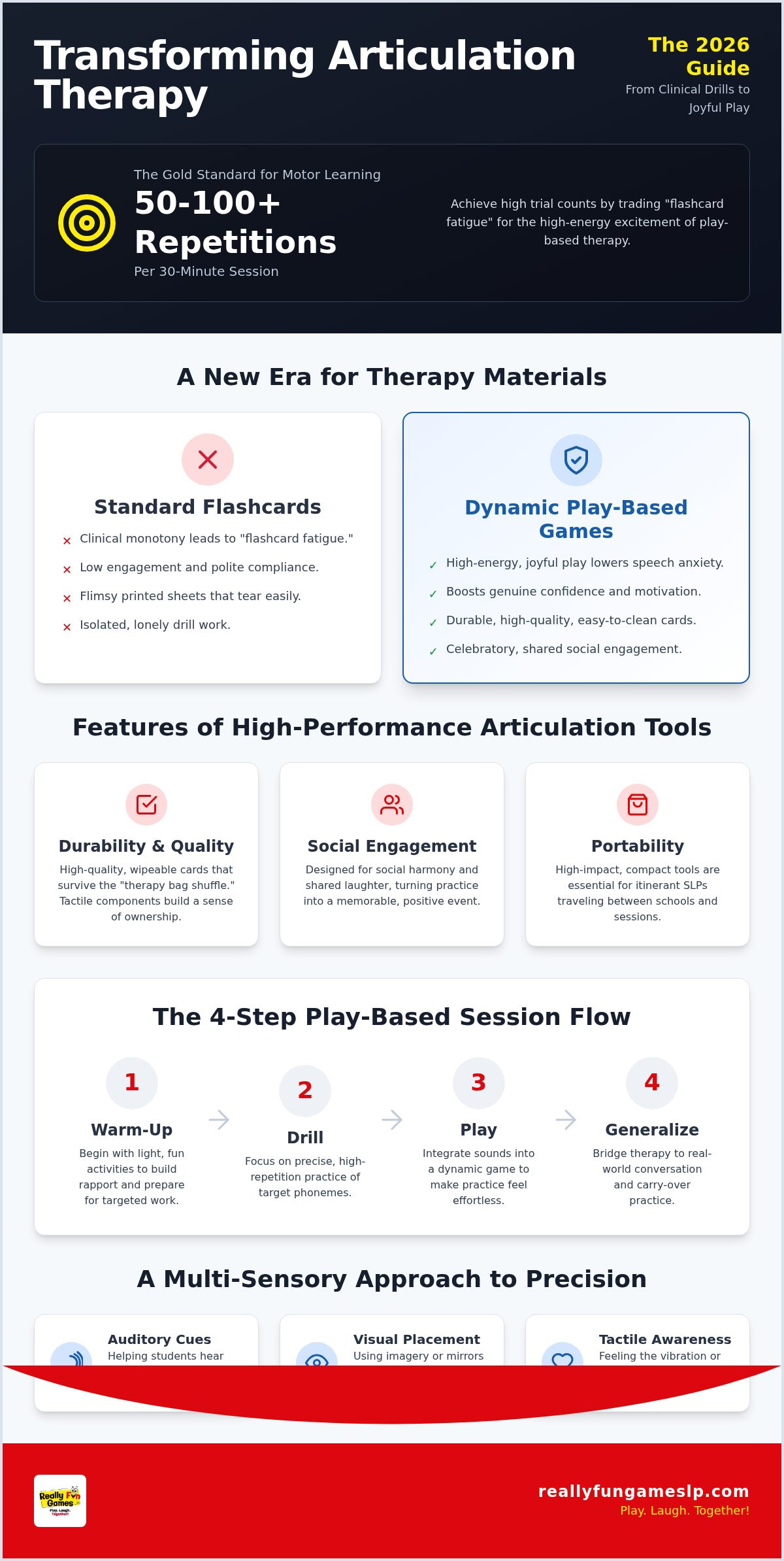
- Aim for the gold standard of 50 to 100 repetitions per session by trading clinical monotony for the high-energy excitement of vocal play.
- Identify the essential features of speech therapy materials for articulation that ensure your tools survive the busy schedule of an on-the-go therapist.
- See how tongue twisters bridge the gap to real-world conversation by challenging students with complex co-articulation patterns in a fun, competitive format.
- Follow our “Warm-up, Drill, Play, Generalize” flow to maximize every minute of your session while boosting student confidence and trial counts.
- Discover award-winning card games designed for ages 8 and up that turn carry-over practice into a highlight of the day for families and students alike.
What are Speech Therapy Materials for Articulation?
Articulation materials are the vibrant, essential tools that empower children to find their voice by facilitating correct speech sound production. They’re much more than just clinical aids. They’re the spark that ignites a student’s desire to participate and succeed. For effective motor learning to take place, therapists aim for a high volume of practice, often reaching between 50 and 100 trials in a single thirty-minute session. That’s a high bar to clear, and it’s exactly why choosing the right speech therapy materials for articulation is so vital for success. These materials serve as the bridge between clinical goals and student motivation. As we move through 2026, we’re witnessing a beautiful shift away from lonely, 2D flashcards toward 3D social engagement tools that transform practice into a celebratory, shared event. When a child is working through a speech sound disorder, the energy of the room matters just as much as the placement of the tongue.
The Role of Phonemes and Sound Placement
Every sound we make is a tiny miracle of coordination. Specialized materials are designed to target specific phonemes, such as the persistent “r”, the sibilant “s”, the liquid “l”, or the tricky “th”, across various word positions. It isn’t just about repetition; it’s about precision. Modern tools focus on providing immediate feedback through various sensory channels. This multi-sensory approach often includes:
- Auditory cues: Helping students hear the crispness of a correct production.
- Visual placement: Using imagery or mirrors to guide the lips and tongue.
- Tactile awareness: Feeling the vibration or airflow of specific sounds.
For a deeper look at how these elements integrate into a learning environment, explore our resource on educational games for speech therapists.
Why 2026 is the Year of Play-Based Therapy
The old “drill and kill” methods are quickly becoming a thing of the past. We’ve discovered that high-energy, joyful play is the most effective way to lower “speech anxiety” and build genuine confidence. When students are laughing and engaged in a game, they’re less likely to overthink their speech and more likely to let their natural voice shine. This environment fosters “vocal agility,” where students navigate challenging speech patterns with ease and spontaneity. By focusing on social harmony and shared laughter, we ensure that speech therapy materials for articulation create memories that last long after the session ends. It’s about bringing people together and making every sound count.
Key Features of High-Performance Articulation Materials
High-performance tools do more than just sit on a table. They need to keep up with the fast-paced, joyful energy of a modern therapist. When you’re searching for effective speech therapy materials for articulation, you aren’t just looking for a list of words. You’re looking for quality that survives the “therapy bag shuffle” and designs that truly delight. It isn’t just about the number of cards in a box; it’s about how those cards facilitate a deep, meaningful connection between you and your student. The best materials bridge the gap between clinical necessity and the spontaneous excitement of play.
Durability and Physical Quality
In a busy clinic or classroom, materials take a beating. High-quality card-based games are a lifesaver compared to flimsy printed sheets that tear or wrinkle after just a few sessions. We prioritize longevity because we know these tools are an investment in your students’ futures. Having surfaces that are easy to clean is also a non-negotiable in our modern clinical environment. It ensures a safe, hygienic space for everyone involved. For clinicians following the evidence-based practices outlined in ASHA’s guide to Speech Sound Disorders, you know that consistency is the bedrock of progress. Tactile components, like our Extra Number Dials, add a sensory layer to the experience. They allow students to physically track their repetitions, which builds a sense of ownership and pride in their hard work.
Engagement and Social-Emotional Design
Portability is a massive factor for itinerant SLPs who travel between multiple schools every week. You need high-impact tools that don’t weigh down your bag. However, the real secret to high-performance speech therapy materials for articulation lies in their “age-appropriate” aesthetics. Students aged 8 and up are incredibly perceptive. They’ll quickly check out if a material feels too childish or clinical. They crave vibrant colors, exuberant themes, and a sense of “cool” that matches their growing personalities. Humor plays a vital role in this social-emotional design. When a student makes a mistake during a challenging tongue twister, a funny theme makes that moment feel safe and lighthearted. It transforms a potential frustration into a shared laugh. This level of interaction is what creates true “replayability.” When materials encourage two-way communication and social harmony, students look forward to their next session. You can find these high-engagement options by exploring our award-winning card games today.
Standard Flashcards vs. Dynamic Tongue Twister Games
Flashcards often provide a predictable, safe rhythm that can lead to a quick loss of interest. You show a card, the student says the word, and you move on to the next one. It’s functional, but it lacks the “surprise” element that keeps a child’s brain truly active and engaged. Dynamic tongue twister cards introduce an element of the unknown that sharpens focus and builds genuine excitement. When students don’t know which silly or challenging phrase is coming next, their engagement levels skyrocket. This transition from static drills to active play is what defines modern speech therapy materials for articulation. In a standard ten-minute drill, a student might hit 30 repetitions before their eyes glaze over; however, in a ten-minute round of a high-energy game, they can easily reach 70 or 80 trials without even realizing it. Mastering a “tricky” phrase provides a massive confidence boost that a single word simply can’t match.
| Feature | Standard Flashcards | Dynamic Tongue Twister Games |
|---|---|---|
| Engagement Style | Passive and repetitive | Active and competitive |
| Speech Context | Isolated words or phrases | Connected speech (Co-articulation) |
| Social Vibe | One-way clinical drill | Shared social interaction |
| Trial Counts | Lower due to boredom | Significantly higher through play |
The Science of Tongue Twisters in Therapy
Tongue twisters are a powerhouse for speech development because they naturally target co-articulation. This refers to the way sounds overlap and influence each other in connected speech. Instead of practicing an “s” or “l” in isolation, a student tackles it while surrounded by other complex sounds. This mimics real-world talking far better than a single-word flashcard ever could. Using tools like Triple Tongue Twisters challenges the motor planning system to move quickly and accurately between different articulatory positions. This level of complexity is essential for generalization, which is the ability to use new speech skills outside of the therapy room. For a deeper look at this process, check out our guide on how tongue twister games improve speech. By following the evidence-based strategies found in ASHA’s Guide to Speech Sound Disorders, we ensure that varying the context of practice leads to long-term success and vocal agility. It’s a fundamental shift in how we choose speech therapy materials for articulation for older students.
Ages 8+ and the “Cool Factor”
As kids grow, their tolerance for “babyish” materials drops to zero. Teens and pre-teens want to feel challenged and respected, not patronized with overly simplistic tools. Competitive games like Tricky Tetra Tongue Twisters appeal to this older demographic by tapping into their natural desire for mastery and social connection. By using a game night theme, you transform the therapy room into a social event where laughter is the main ingredient. It’s no longer about fixing a “problem.” Instead, it’s about winning a challenge with friends or family. When a student feels “cool” while practicing, their buy-in increases, and they become active participants in their own journey toward clear communication.
How to Maximize Repetitions with Play-Based Materials
Finding the right rhythm in a 30-minute session is an art form. Integrating high-quality speech therapy materials for articulation into your routine doesn’t just happen; it requires a thoughtful, high-energy framework. We love the “Warm-up, Drill, Play, Generalize” flow. It moves the student from basic awareness to spontaneous, joyful communication without the heavy weight of clinical boredom. By structuring your time this way, you ensure that every minute counts toward those vital repetition goals while keeping the atmosphere light and celebratory.
Session Structure for High Trial Counts
To hit those big numbers, you need a plan that keeps the momentum moving forward. Follow this simple 5-step integration to make the most of your session:
- Step 1: Start with a quick-fire round using 10 isolated sound cards to establish correct placement and build immediate confidence.
- Step 2: Introduce a complex tongue twister card from our award-winning collections to challenge the motor planning system.
- Step 3: Use a tactile tool like our Extra Number Dials to track successful repetitions. It turns “work” into a visible score-keeping game that kids love.
- Step 4: Gradually increase the speed of the game to build automaticity and vocal agility.
- Step 5: Conclude with a “victory lap” where the student chooses their favorite phrase to perform for the group, ending on a high note of social harmony.
For older students, transition into natural conversation using “Really?! Think You Know Me? Guess Again!”. This game is a fantastic tool for practicing sounds in spontaneous speech. Instead of reading a list, students are busy guessing facts about their peers or therapists. They’re so focused on the social connection and laughter that their newly learned speech patterns start to become automatic without them even realizing it.
Generalization and Carry-Over Strategies
Generalization is the ultimate goal of any therapy journey. Moving from card-reading to “spontaneous speech” requires speech therapy materials for articulation that feel like a natural part of real life. You can encourage “vocal play” at home by suggesting a round of Santa’s Tongue Twisters or Trick-or-Treat Tongue Twisters during family gatherings. These seasonal decks make “homework” feel like a festive event rather than a chore. For even more inspiration, explore these 15 fun speech therapy activities that transform communication skills. When you’re ready to upgrade your toolkit with games that families actually enjoy, choose the perfect card game for your next session.
The Really Fun Games Collection: Articulation Tools for 2026
Finding high-quality speech therapy materials for articulation that don’t feel like “baby work” is finally easy. Our collection is specifically built for ages 8 and up, filling a massive gap in the market with vibrant, high-energy tools that respect the maturity of older students. Whether you’re a school-based SLP or a parent looking for a joyful way to practice at home, these collections turn every session into a celebration. The core philosophy is simple: keep it easy to learn and highly replayable. This ensures that students stay engaged for months, not just minutes, allowing for the consistent practice necessary for long-term success.
Spotlight on Triple Tongue Twisters
Triple Tongue Twisters is where the magic of vocal play truly happens. The exuberant artwork and fast-paced gameplay make it an immediate favorite in classrooms and clinics alike. It doesn’t just stop at sound production; it naturally builds phonological awareness as students navigate the rhythm and rhyme of each card. You can explore the full range of these award-winning tools on our Our Games shop page. For therapists who need a comprehensive solution, the Blooming Tongue Twisters deck is crafted with specific SLP articulation needs in mind, offering a focused yet high-energy approach to mastering tricky sounds.
For clinics and schools that want it all, the Really Fun Custom Games Bundle is the ultimate toolkit. It combines our most popular decks into a portable, durable package that’s ready for any group size. Having a variety of options like Tricky Tetra Tongue Twisters on hand means you can pivot your strategy instantly to match the energy of the room. This versatility is what makes our speech therapy materials for articulation a staple for modern clinicians.
The Holiday and Seasonal Collections
Keeping therapy “fresh” throughout the long school year is a breeze with our seasonal collections. Santa’s Tongue Twisters and our Trick-or-Treat decks provide that extra burst of motivation when the mid-term slump hits. These decks are incredible as seasonal gifts for speech therapists or as high-value classroom prizes. They turn a standard Tuesday into a festive event, ensuring that practice remains a joyful habit year-round. By rotating these themes, you keep the “surprise” element alive, which we’ve already seen is vital for maintaining student focus and confidence.
Every deck we create is designed to foster social harmony and laughter. We believe that when students are having a blast, they’re more open to learning and more confident in their own voices. Our 2026 collection isn’t just a set of games; it’s a catalyst for connection and a bridge to clearer communication for everyone involved.
Empower Every Voice with Joyful Vocal Play
The journey toward clear communication is paved with laughter, not just clinical drills. By choosing high-engagement speech therapy materials for articulation, you’re doing more than just tracking repetitions; you’re building a foundation of social confidence and joy. We’ve seen how moving beyond static flashcards to dynamic tongue twisters helps students aged 8 and up master complex sounds in connected speech. These tools prioritize durability for the busy therapist and “cool factor” for the growing student, ensuring that every session feels like a social event rather than a chore.
Our award-winning game designs are trusted by SLPs and educators nationwide to bridge the gap between the clinic and the home. Whether you’re navigating a school hallway or a family dinner table, these games provide the momentum needed for lasting progress. It’s time to swap the monotony for vocal play that actually works and brings people together.
Discover the award-winning Really Fun Games collection and find your perfect articulation match!
Let’s make every sound a celebration of connection and harmony. Your students are ready to shine, and we’re here to help them find their voice through the power of play.
Frequently Asked Questions
What are the best speech therapy materials for articulation for older kids?
The best materials for older kids are those that respect their maturity while keeping the energy high. Triple Tongue Twisters and Tricky Tetra are perfect examples because they avoid “babyish” artwork. These collections focus on complex vocal play and social connection, making them ideal for teens. They turn a clinical session into a competitive, joyful challenge that students actually want to win. It’s about building confidence through laughter and shared play.
How many repetitions are needed in an articulation therapy session?
Aim for 50 to 100 trials per session to achieve the best results for motor learning. This high volume of practice helps the brain create new, permanent speech habits. Reaching these numbers can be a struggle with boring drills, but high-energy games make the repetitions fly by. When kids are laughing and competing, they hit their targets effortlessly. It’s the most effective way to turn hard work into joyful, exuberant play.
Can tongue twisters really help with speech sound disorders?
Tongue twisters are a powerhouse for treating speech sound disorders because they challenge the motor planning system. They require the articulators to move rapidly between different positions, which is exactly what happens in natural conversation. Collections like Blooming Tongue Twisters provide the right level of difficulty to sharpen “vocal agility.” This helps students generalize their skills so they can speak clearly in the real world, not just in the clinic room.
What is the difference between articulation and phonology materials?
Articulation materials focus on the physical production of individual sounds, while phonology tools target rule-based patterns of errors. Many modern speech therapy materials for articulation actually support both areas. For example, our tongue twister decks challenge the physical placement of sounds within complex, rhythmic sentences. This multi-layered approach ensures that students are working on their specific sound goals while also improving their overall phonological awareness and natural speech rhythm.
Are physical card games better than digital speech therapy apps?
Physical card games provide a rich, social experience that digital tools simply can’t match. They foster eye contact and social harmony, which are vital for building communication confidence. While some therapists use screens for quick data, card games like Triple Tongue Twisters encourage exuberant interaction between people. There’s a tactile joy in holding a card and a shared excitement in a group game that makes the learning process feel human and warm.
How can I encourage speech practice at home without it feeling like homework?
Shift the focus from “work” to “connection” by integrating practice into family activities. Use games like Really?! Think You Know Me? Guess Again! during car rides or weekend hangouts. This makes speech practice feel like a natural part of your social life rather than a clinical assignment. When the whole family is involved in the fun, the student feels encouraged to use their voice in a safe, celebratory environment that rewards effort.
What should I look for in a “gift for a speech therapist”?
The best gifts are those that combine clinical utility with a spirit of fun. Look for portable, durable card decks that survive a busy therapist’s bag. Seasonal options like Santa’s Tongue Twisters or our Really Fun Custom Games Bundle are fantastic choices. They save the therapist prep time and bring a burst of fresh energy to their sessions. It’s a thoughtful way to support their mission of fostering meaningful bonds and communication.
How do I use conversation games for articulation carry-over?
Conversation games are the bridge to real-world success. Start by having the student use their target sounds while answering lighthearted questions from Really?! Think You Know Me? Guess Again!. This forces them to focus on clear speech during unscripted, spontaneous talking. Effective speech therapy materials for articulation should always aim for this level of carry-over. It’s where the hard work of the clinic transforms into the confident, easy communication of daily life.